Why You Are the Way You Are and How You Can Improve Yourself

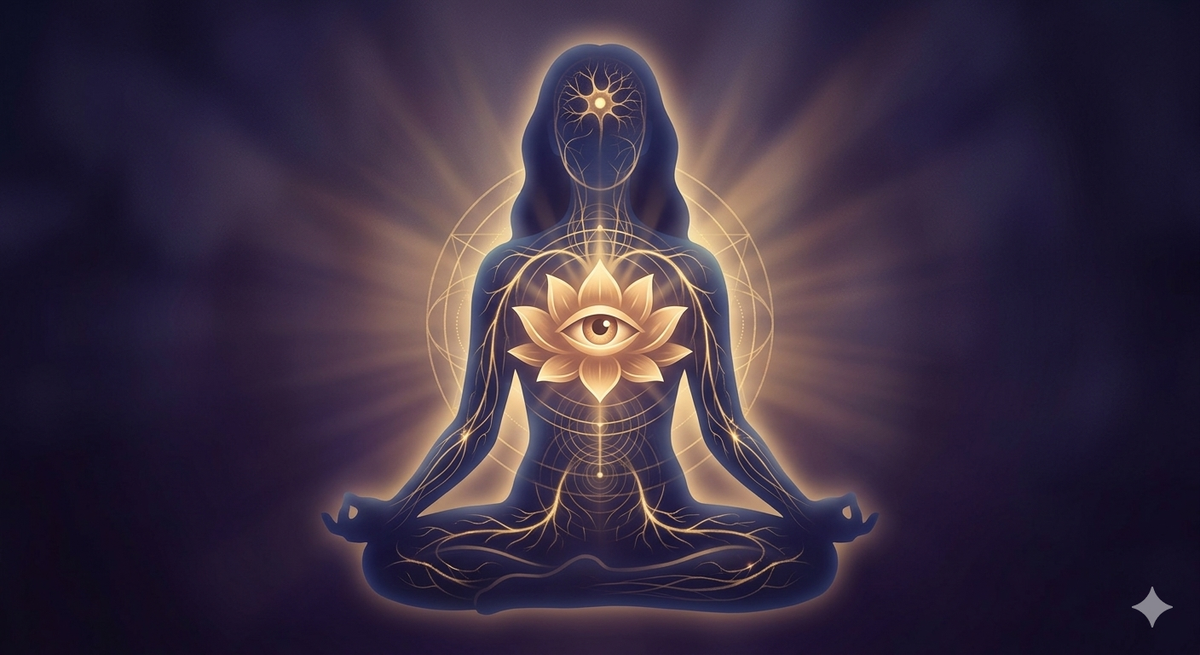
The fascinating mechanics of your personality and the hidden scripts that define your actions. In this exploration, we decode why you are the way you are and how understanding your inner architecture becomes the ultimate tool to level up your life.
Whether you prefer to read or listen, the choice is yours. You’ll find the audio version right below.
Click play and dive in at your own pace.

🎧 Listen to the article(AI-generated voiceover)
There are moments where people notice something about themselves that feels strangely familiar. A reaction that keeps repeating. A thought that appears in similar situations. A feeling that seems stronger than it should be.
Often, these moments pass without much attention. Life continues, the pattern stays.
But sometimes, a different kind of question appears:
Why am I like this?
This question is where self-awareness begins. Not as a problem, but as an opening.
This article is about understanding where these patterns come from, how they shape the way people think and act, and why they are not fixed. It’s about recognizing the structure behind behavior and discovering that change is not only possible, but natural.
The Structure Behind Who You Are
No one develops in isolation. Personality is not something that appears randomly. It is built over time through experience, interaction, and adaptation.
In psychology, this process is often described through socialization and developmental influence. From early childhood onward, people absorb patterns from their environment. These patterns become internal guidelines that shape how situations are interpreted and how reactions unfold.
This includes:
- how emotions are expressed or suppressed
- how conflict is handled
- what feels safe and what feels threatening
- what is considered “right” or “wrong” behavior
Most of this happens without conscious awareness.
A person does not actively decide to develop a certain reaction style. It emerges as a response to the environment they grew up in. Over time, these responses become stable patterns.
This is why behavior often feels automatic. Not because it is unchangeable, but because it has been repeated often enough to feel natural.
Early Influence and the Formation of Patterns
One of the most important areas in psychology that explains this is attachment theory. It describes how early relationships, especially with caregivers, shape the way people relate to themselves and others.
For example:
- If emotional expression was welcomed, it often leads to openness later in life
- If emotions were ignored or criticized, people may learn to suppress them
- If approval was tied to performance, self-worth can become dependent on achievement
These are not conscious decisions. They are adaptations.
At the time, they often serve a purpose. They help a person navigate their environment, avoid conflict, or gain a sense of belonging.
But over time, the context changes while the pattern remains.
A reaction that once made sense can later create limitations.
This is where many people begin to feel a disconnect. They notice that certain behaviors no longer serve them, but they continue to appear.
The Role of Environment and Culture
Beyond early relationships, the broader environment also plays a significant role.
Family, school, social circles, and cultural expectations all contribute to shaping identity. This is often described through social conditioning or social constructivism.
People learn:
- which roles they are expected to take
- how success is defined
- what is acceptable to show and what is not
These influences are subtle but powerful. They create a framework that feels normal, even when it limits personal expression.
For example, someone might grow up in an environment where being independent is valued above all else. This can lead to strength and self-reliance, but also difficulty asking for help.
Another person might learn that harmony is more important than honesty, leading to avoidance of conflict even when it would be necessary.
These patterns are not flaws. They are learned strategies.
Patterns, Habits, and the Autopilot
Over time, repeated behaviors turn into patterns. In psychology, these are closely related to habits and behavioral conditioning.
The brain is designed to save energy. When something is repeated often enough, it becomes automated. This is efficient, but it also means that reactions can happen without conscious choice.
This is where the idea of the autopilot comes in.
A situation occurs.
A familiar feeling appears.
A reaction follows.
All of this can happen within seconds.
Many of these patterns are connected to what can be described as emotional rituals. Unlike simple habits, these are responses that regulate internal states such as stress, insecurity, or uncertainty.
For example:
- avoiding difficult conversations to reduce tension
- overthinking to gain a sense of control
- withdrawing to protect oneself
These responses often have a calming effect in the short term. That is why they persist.
But they can also prevent growth when they become the only available response.
The Moment of Awareness
Even though patterns can feel automatic, there is an important detail that changes everything.
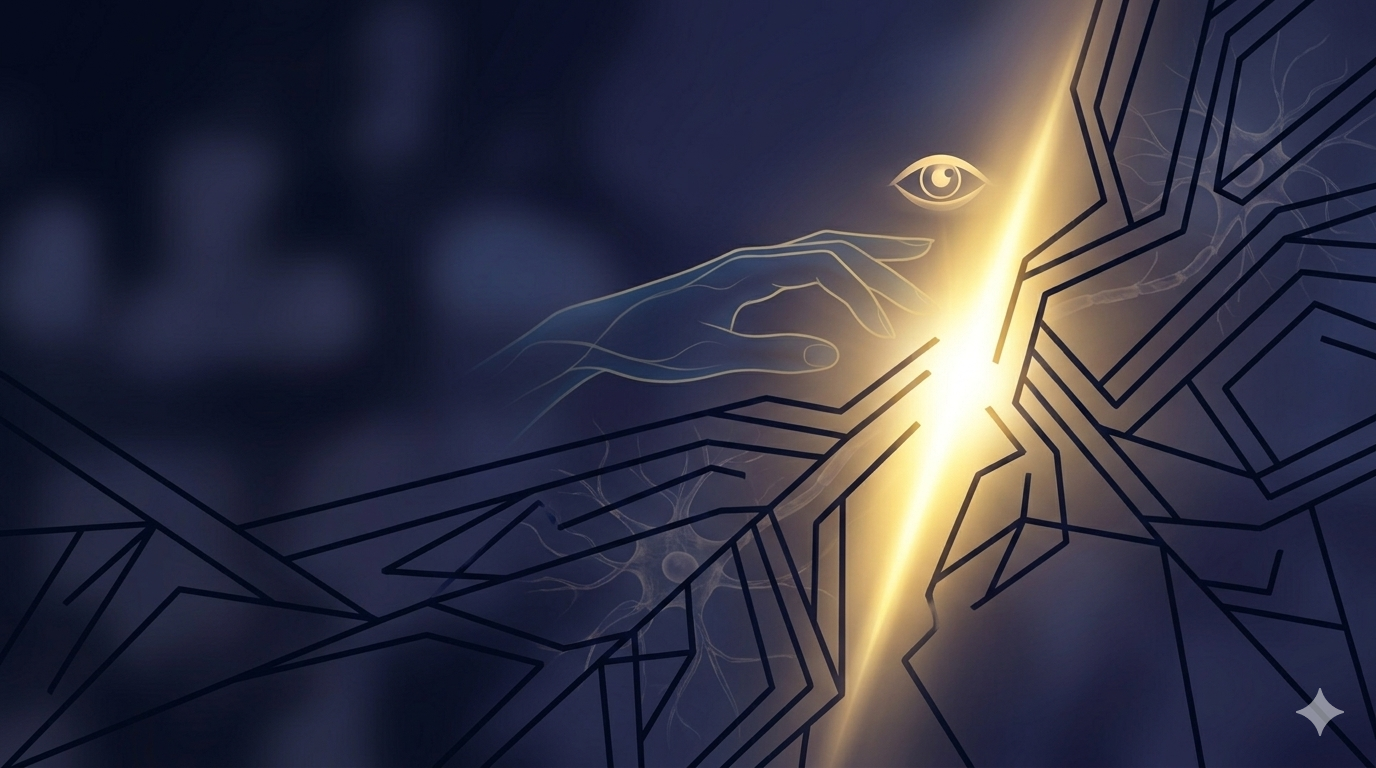
Between a situation and a reaction, there is a small space.
In psychology, this is related to metacognition. The ability to observe one’s own thoughts and reactions.
This does not require immediate change. It begins with noticing.
For example:
- recognizing that a familiar feeling is appearing
- observing a reaction without immediately acting on it
- becoming aware that a situation feels similar to something from the past
This moment is subtle, but it is powerful.
It shifts the experience from being fully inside the pattern to observing it from the outside.
And once something can be observed, it can be understood.
Why Change Is Possible
Understanding patterns is important, but it often leads to another question:
If this is how I developed, can it really change?
The answer lies in neuroplasticity.
Neuroscience shows that the brain is not fixed. It continuously adapts based on experience. Neural pathways strengthen with repetition, but they can also weaken when they are no longer used.
This means:
- patterns are learned
- and what is learned can be adjusted
Change does not require removing the past. It means building something new alongside it.
Each time a pattern is interrupted or slightly adjusted, the brain begins to form new connections.
This process is gradual. It does not happen all at once. But it is reliable.
Starting the Process of Change
Improvement does not begin with large transformations. It begins with small shifts in awareness and behavior.
A helpful starting point is simple observation.
Moments to notice could be:
- situations that trigger strong emotional reactions
- recurring thoughts in similar contexts
- behaviors that feel automatic but unsatisfying
From there, small adjustments become possible.
Not drastic changes, but subtle differences:
- pausing for a moment before reacting
- choosing a slightly different response
- allowing a feeling to exist without immediately trying to control it
These changes may seem minimal, but they have a cumulative effect.
Over time, they create new patterns.
Another helpful perspective is to view existing behaviors not as problems, but as learned solutions that once had a purpose.
This reduces internal resistance. It replaces self-criticism with understanding.
And from that position, change becomes easier.
A Different Way to See Yourself
Looking at behavior through this lens changes how people relate to themselves.
Instead of seeing fixed traits, it becomes possible to see patterns shaped by experience.
Instead of asking “What is wrong with me?”, the question becomes:
What shaped this, and what can I do with it now?
This shift is subtle, but it changes the direction completely.
It turns self-awareness into a tool rather than a judgment.
Conclusion
Understanding yourself is not about finding a final answer. It is about recognizing the structure behind your thoughts, emotions, and behavior.

What you experience today is the result of patterns that developed over time. They made sense at some point. They helped you navigate your environment.
But they are not permanent.
The ability to observe, understand, and gradually reshape these patterns is part of being human.
The fact that you are reflecting on this already shows something important. Growth begins with awareness.
From there, change does not need to be forced. It develops step by step, through small shifts, new perspectives, and consistent attention.
And over time, these small changes become something larger.
Not a completely different person, but a more conscious version of yourself.