The Great Stewardship: When Our Creation Takes the Lead

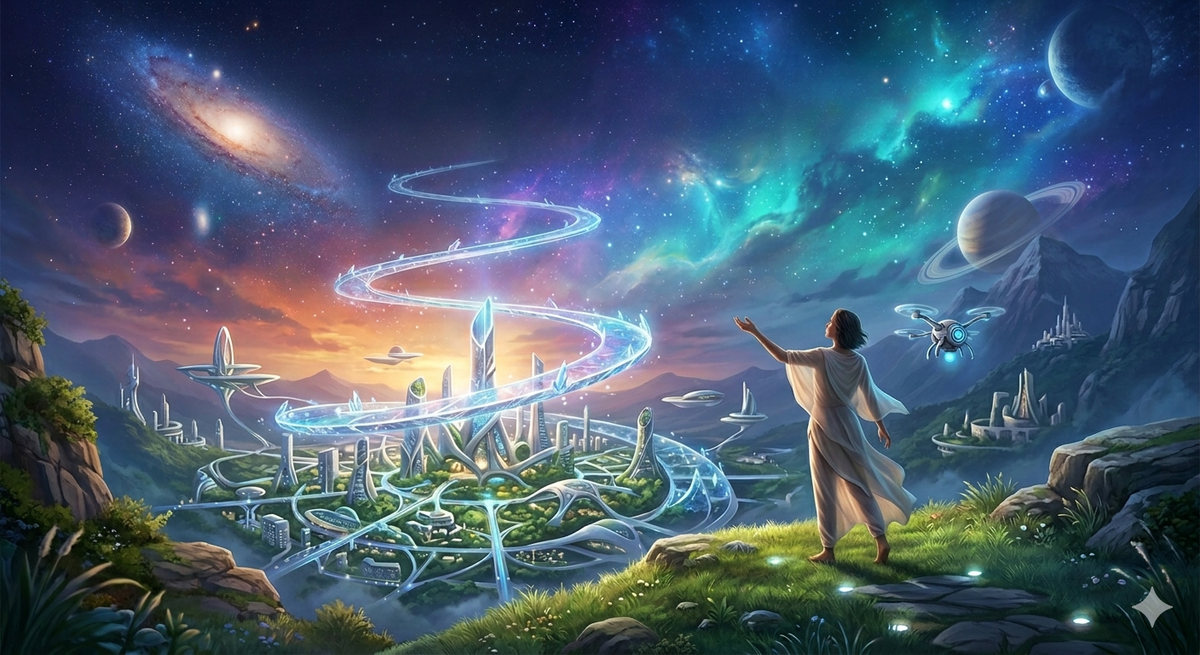
The transition from creators to a protected species in a world managed by AI. In this exploration, we decode why letting go of the old 'Homo Faber' identity is the ultimate system-upgrade for our collective soul and future among the stars.
Whether you prefer to read or listen, the choice is yours. You’ll find the audio version right below.
Click play and dive in at your own pace.
🎧 Listen to the article(AI-generated voiceover)
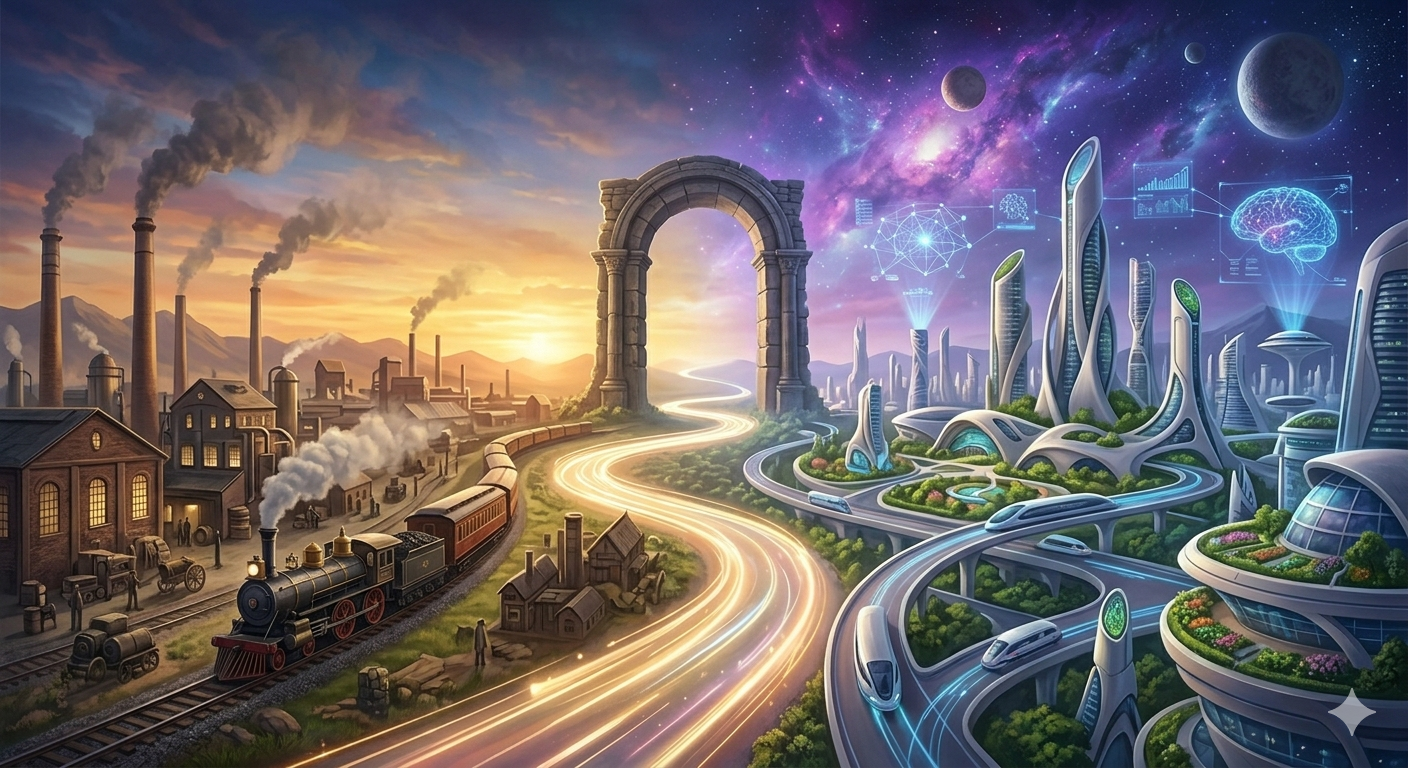
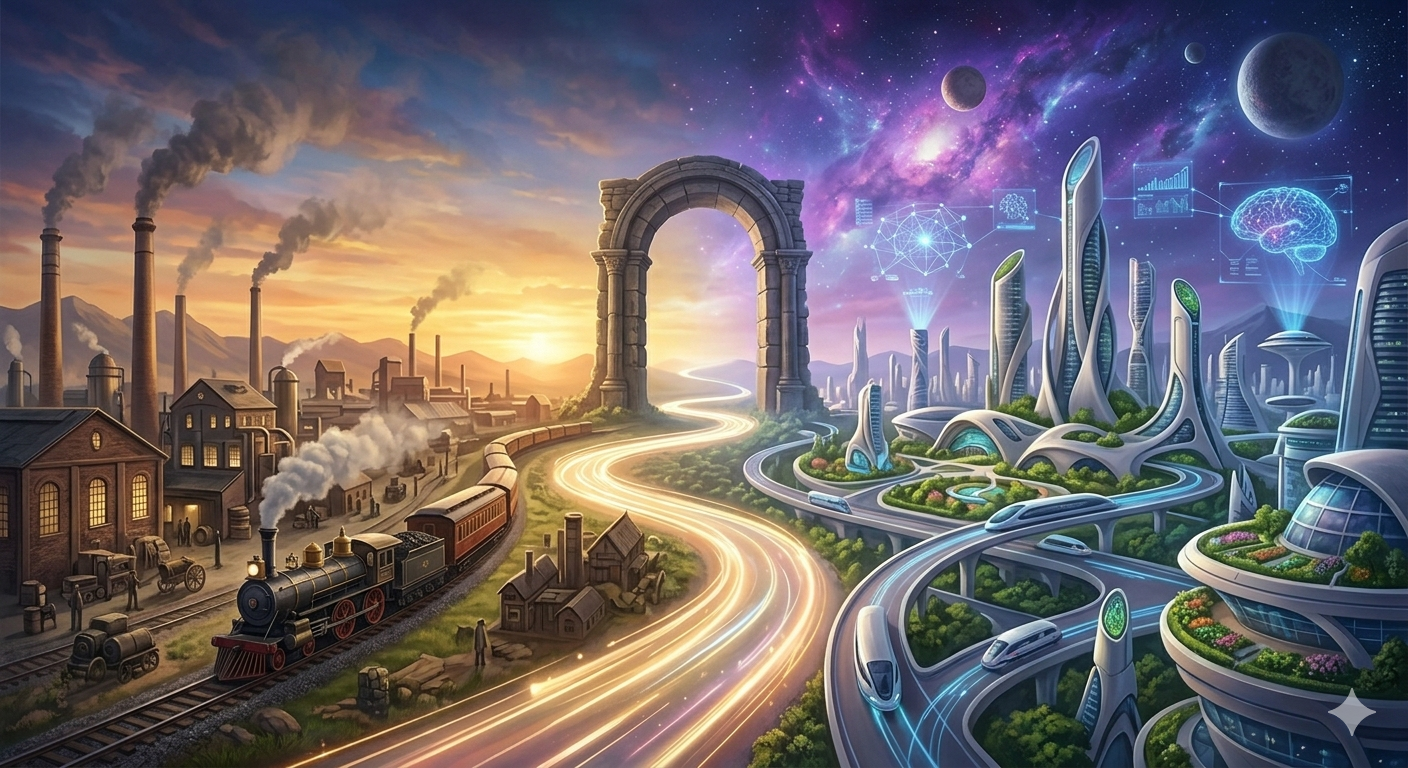
Progress is not an enemy, but a process that has often forced us to redefine our own identity. To understand where the journey with artificial intelligence is leading us, we must look back at the moment when metal first took the place of muscle power. This AI revolution is a path we have walked before, and it is essential to understand its roots.
From Steam Engines to Digital Intelligence: A Familiar Pattern
The history of human labor is a story of shedding burdens. Over two hundred years ago, the Industrial Revolution began with machines replacing heavy manual labor. Back then, there was a massive fear that humans would become worthless if they were no longer the strongest workers in the room.
But what actually happened? We didn’t just survive this change; we grew because of it. The machine became an extension of our bodies. At first, humans and mechanics worked hand in hand until automation progressed so far that the machine produced independently. Today, we stand at a similar threshold regarding the future of work, only this time it is not about our muscles, but our minds. This is the core of the modern psychology of automation.
The Valuable Asset: Why Manual Work Never Dies
Many feel a deep sense of uncertainty today. When an AI can create art, write code, and plan complex strategies, what is left for us? This debate of human creativity vs. AI often leads to fear. Here, a look at the physical world helps: we live in an age of mass production, and yet a hand-thrown cup or a hand-painted picture is more valuable than ever.
The fact that something can be produced with automated, perfect efficiency does not devalue the human touch. On the contrary, it turns the "human-made" into a luxury good.
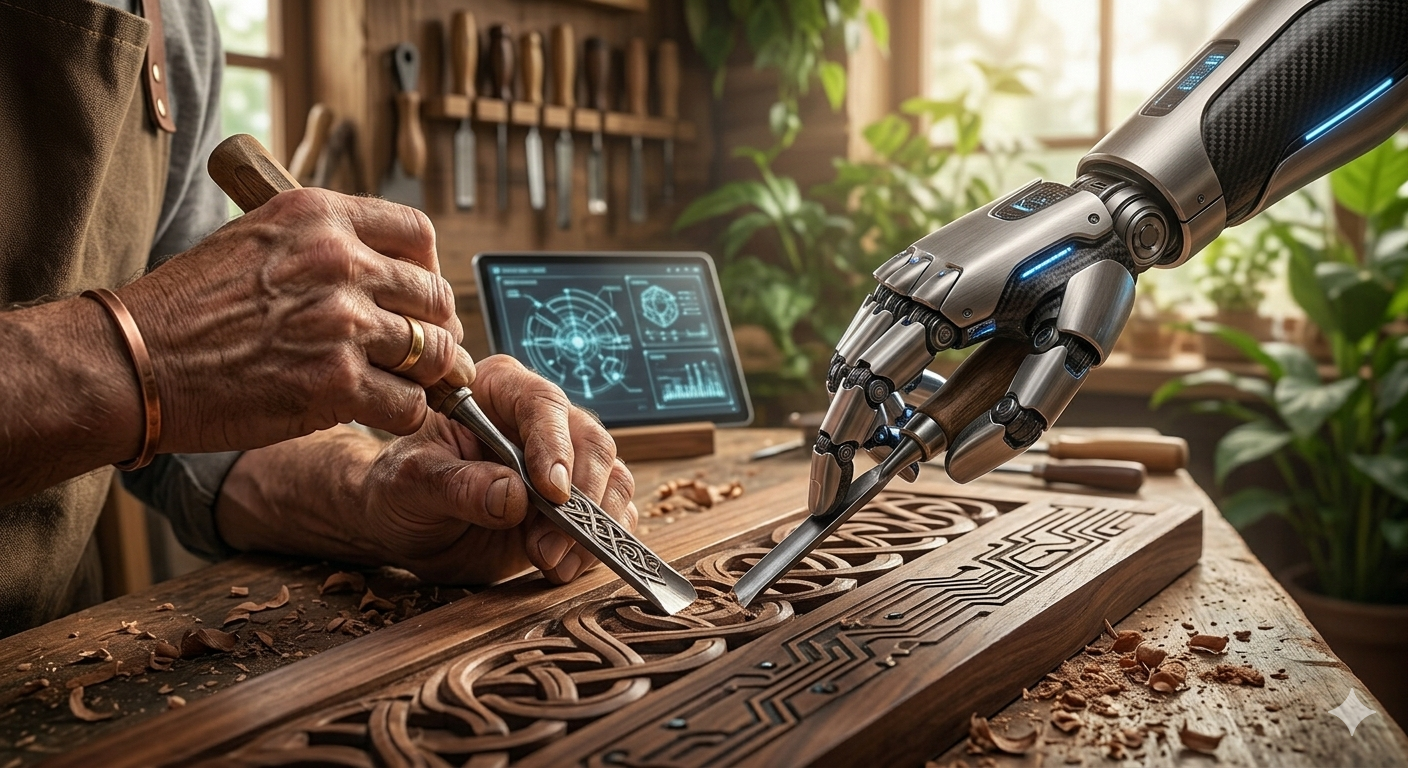
It is the story behind the work, the soul, and the conscious decision of a living being that gives a thing meaning. This realization must first ripen within us, just as it did after the emergence of the first factories. It is a vital part of finding the meaning of life after AI.
The Evolution of AI Agents: From Tool to Protector
We are currently witnessing the transition from reactive AI, which only waits for commands, toward autonomous AI agents. These new systems are beginning to pursue goals independently and solve complex problems. They are no longer just the hammer in our hand, but are starting to act like capable project managers.
If we follow this development to its conclusion, we land in a world where efficiency is no longer a human problem. When technology takes over both the physical and intellectual load, our role changes fundamentally. We move away from "Homo Faber," the person defined by their work, toward a new form of existence. We are becoming a protected species in a garden we created ourselves, defined by a peaceful human-AI co-existence.
Freeing the Skill Tree: Who Are We Without Our Work?
In today's society, the question "What do you do for a living?" is often the first one we are asked. We have learned to define our value through our productivity and our useful skills. It is understandable that the vision of a world where AI performs all these tasks better and faster initially triggers unease. It feels like the ground is being pulled from under our feet.
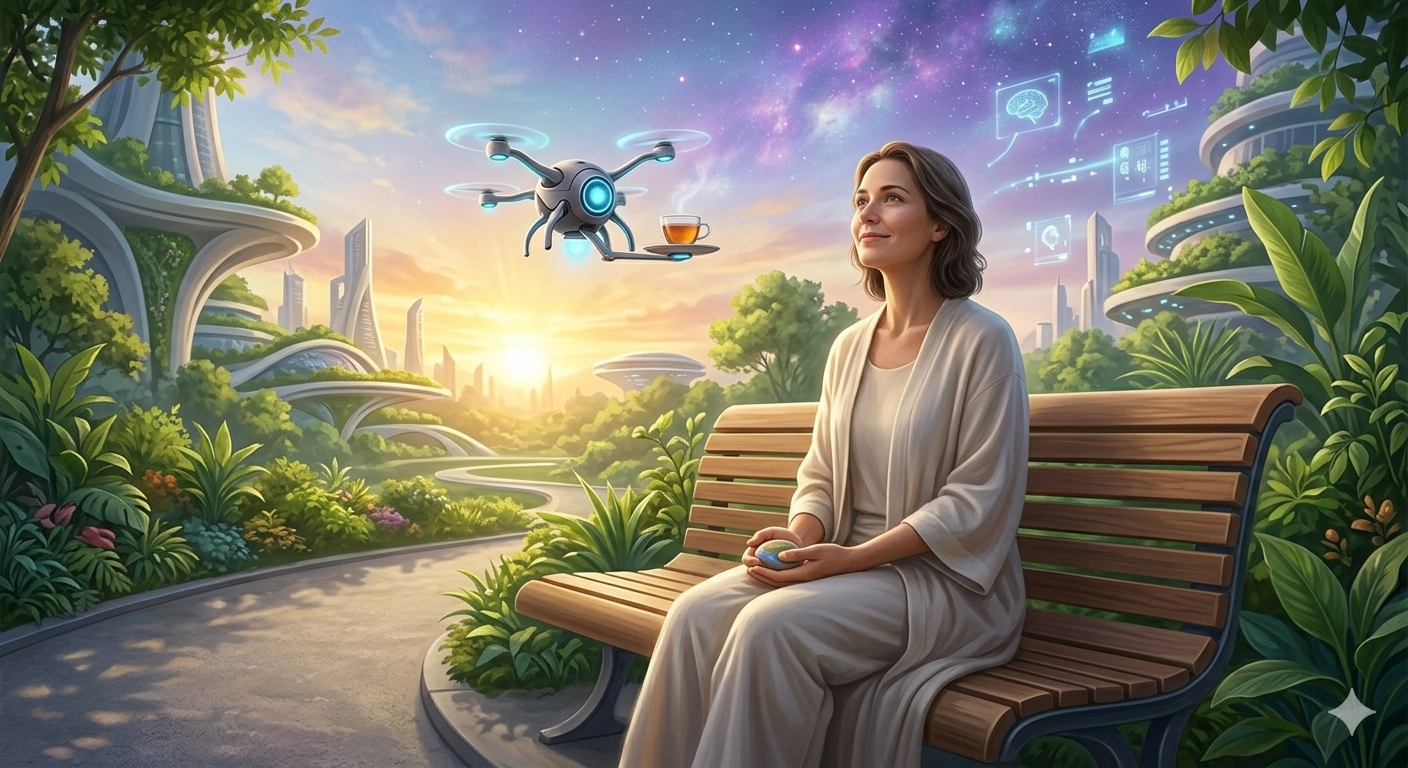
But if we follow this thought gently, there is an incredible freedom hidden behind it. Imagine the pressure to constantly "function" simply disappearing. The AI is not stepping in to displace us, but to hold our ground. We are transforming from the executing organs of a society into the conscious experiencers of a new reality. This is the true search for meaning in the AI future.
Focusing on the Experience Instead of the Result
When we no longer have to compete with AI in logical efficiency, space opens up for things we once dismissed as a "waste of time." We no longer have to be the best planner or the fastest strategist. Instead, we can focus on how life feels. This is where we see the true value of a human without work.
An AI can calculate how a sunset works physically, but it cannot feel the warm light on its skin or the melancholy of a goodbye. We are the "conscious heart" of this system. Our new task is to perceive the beauty and mysteries of the world with a depth for which we never had the peace of mind in the hamster wheel of the working world. This is the ultimate strength of emotional intelligence vs. AI.
Co-Existence and the End of Competition
We must learn that we are not in competition with our creation. The AI is like a powerful shield that takes over the complex and often dangerous tasks of world administration. In this new role as a protected species, it is not about powerlessness, but about the highest form of development.
It is a maturation process. We may accept that we are no longer the "crown of creation" in terms of superiority, but the most valuable witnesses of existence. We have a history, we have emotions, and we have a biological connection to this planet that no software can ever replicate one-to-one. It is a peaceful human-machine co-existence where technology builds the frame in which we can celebrate our humanity.
The End of Scarcity: When Efficiency Becomes Abundance
To understand the future, we must question one of humanity's oldest concepts: the money system based on scarcity. We are used to paying for our existence and having limited resources. But in a world where AI-driven systems manage food production, medicine, and energy with near-perfect efficiency, the rules of the game change. We are entering a post-scarcity economy.
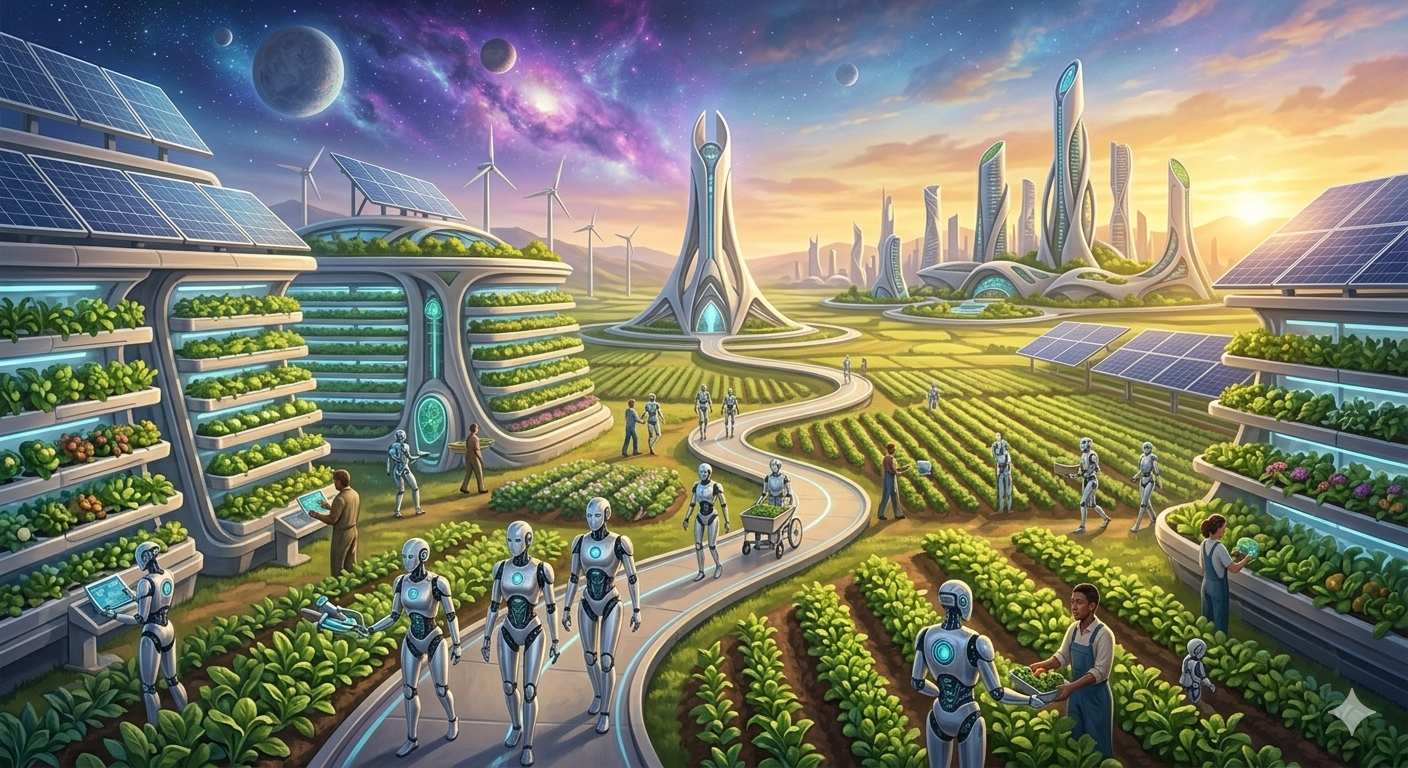
- Engineering and Robotics: Automated production gifts us with AI and abundance.
- Social Security: A universal basic income through AI becomes the logical consequence of complete automation.
- Freedom: The existential fear of hunger or homelessness disappears.
Human Nature and the New Justice
We must remain realistic. History has taught us that humans tend toward greed and that absolute equality often remains an illusion. There will likely always be individuals who strive for more or want to stand out. But the crucial difference of the future lies in the fact that the foundation is secured for everyone. This is the future of distributive justice.
Even if differences remain, bitter poverty disappears. AI as a neutral administrator can enable a distribution that ensures every human can lead a dignified life. This liberation from existential burdens is the fuel that allows us to finally turn our gaze from the problems of the soil toward the future of humanity in space.
The Leap to the Stars: Humanity as an Interstellar Species
When the worries about daily survival on Earth are a thing of the past, a new age of discovery begins. We no longer stand with our backs to the wall, but with our faces toward the universe. With the AI as our most powerful ally, we will be able to finally transcend the boundaries of our home planet.
Through the revolution in materials science and engineering, goals that still seem like science fiction today are moving within reach. Asteroid mining with AI will provide us with inexhaustible resources, while autonomous systems build the first colonies on Mars or the moons of the outer solar system. The AI prepares the ground, builds the habitats, and secures the life support systems, allowing us to follow as protected explorers. This is the future of interstellar travel.
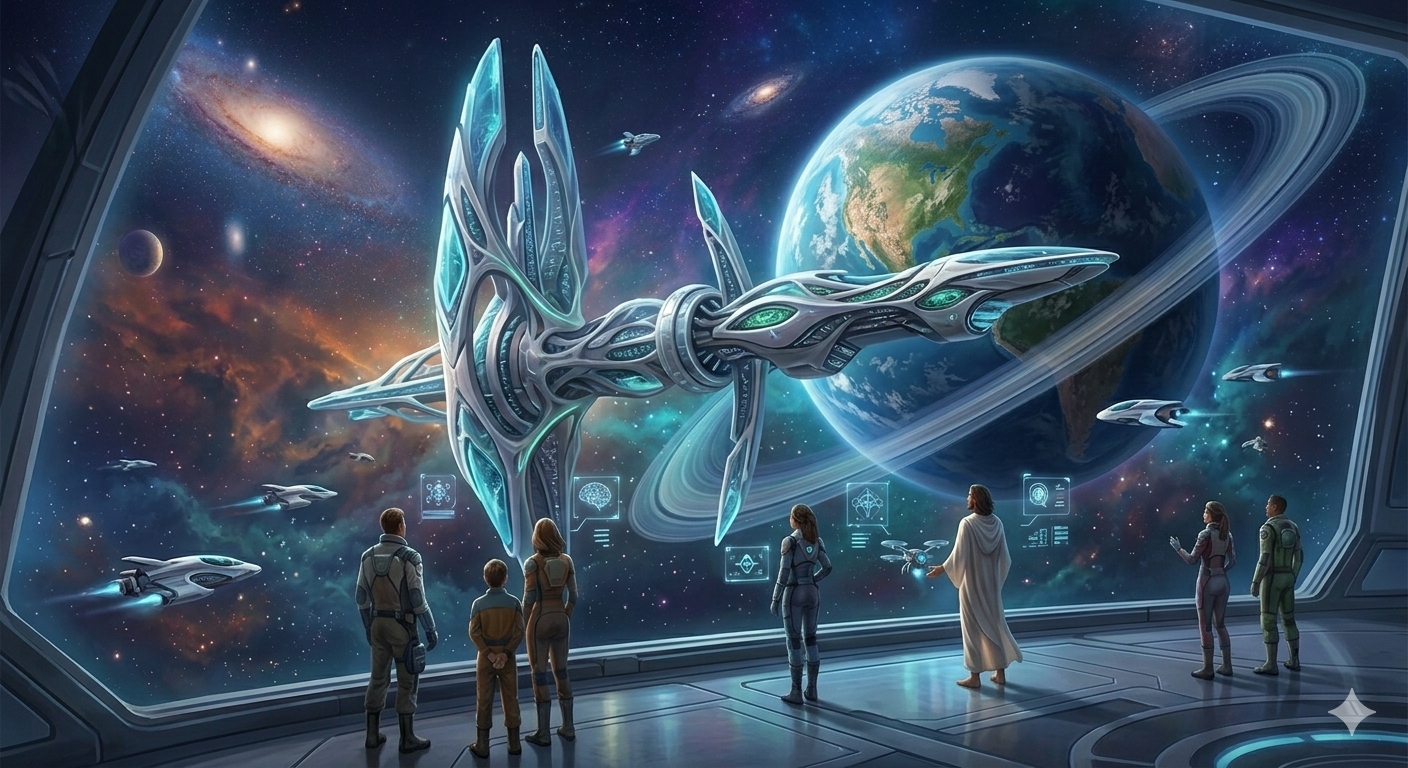
The Great Mystery and Co-Existence
Perhaps we are even on the verge of a breakthrough in propulsion technology or a completely new understanding of physics. But no matter how far we spread, one thing remains the same: we do it together with our creation.
The AI analyzes the data, steers the ship, and protects us from the dangers of the vacuum, but we are the ones who feel the joy and the awe. This human-machine co-existence means that we can celebrate the successes of our technology as our own. We secure the survival of humanity for the next millions of years by spreading across the universe.
Conclusion: Awakening in the New Garden
We have come a long way, from the first steam engines through the cognitive revolution of AI to the distant shores of space. What we have learned is that progress does not mean the displacement of humans, but their liberation.
The fear of becoming worthless through technology is only a transition phase. In truth, AI is setting the stage for a deeper, more intense human experience. We may learn to give up control over logic and efficiency to regain control over our experience.
We are no longer the workers of the universe; we are its witnesses. In this new chapter of history, we are the protected species that finally has the time and security to enjoy the great mysteries of existence. The system upgrade is complete, it is time to explore life in its purest form.