Kenshi: The Art of Failing Upward and the Journey to True Sovereignty


The brutal yet rewarding world of Kenshi by Li-Fi Games Ltd. In this exploration, we decode why the struggle in the desert is the ultimate blueprint for personal resilience and radical growth.
Whether you prefer to read or listen, the choice is yours. You’ll find the audio version right below.
Click play and dive in at your own pace.
🎧 Listen to the article(AI-generated voiceover)
- Resilience & Growth: Why we thrive on the struggle
- The Great Powers: The factions and their dogmas
- Ancient Lore: Skeletons and the melancholy of machines
- Sovereignty: Base building and the price of freedom
- The Ecosystem: Essential mods for your system upgrade
- Architecture of the Mind: The psychology behind Kenshi
In the vast landscape of modern gaming, we are often treated like royalty. We are the "Chosen Ones," the heroes with a prophecy at our backs and a destiny that ensures our success. But then, there is Kenshi. In the gargantuan, indifferent sandbox of this world, you are nobody. You have no destiny, no magical sword, and no plot armor to protect you from the burning sun or the blades of bandits.
When you start your journey, you are just one soul among millions, often armed with nothing but a tattered loincloth and a rusted iron bar. The world of Kenshi is a merciless fusion of post-apocalypse, samurai culture, and dystopian sci-fi. Yet, it is exactly here that we find the most valuable lesson for our own lives: True strength is never a gift; it is forged in the dust.
The Rocky Effect: Why Being Beaten Down is a System Upgrade
In almost every other RPG, you improve by winning. In Kenshi, you improve by surviving. The most vital attribute in the game is Toughness, and there is only one way to level it up: by taking hits.
Imagine being ambushed by a group of starving bandits. You are outnumbered, you are slow, and within seconds, you are bleeding in the sand. In that moment, something magical happens. While your character lies there, struggling to remain conscious, their body is learning. It is learning to ignore pain. It is learning that the ground is not the end.
It is reminiscent of Rocky Balboa: It is not about how hard you can hit, it is about how many hits you can take and keep moving forward. In Kenshi, every defeat is a buff for your future. When you rise again, your bones are harder and your will is firmer. The game forces you to convert the frustration of failure into the energy of growth. There are no shortcuts to success, only the hard path through the grit.
The Radical Freedom of Being Nobody
What makes Kenshi truly special is the complete absence of guidance. There are no quest markers and no NPCs telling you that you must save the world. While this void can be intimidating at first, it is actually the ultimate freedom.
You can be a simple farmer, trying to grow wheat in a green valley. You can be a thief, lurking in the dark alleys of desert cities. Or you can be a liberator of slaves, breaking the chains of tyrants. Kenshi does not judge your goals. It simply gives you the tools and the consequences.
This open world is a mirror of our own reality. We often wait for permission or a plan provided by someone else. Kenshi tells us a different story: The map is empty; take the pen and draw the lines yourself.
A World Built on Dogma: The Great Powers of Kenshi
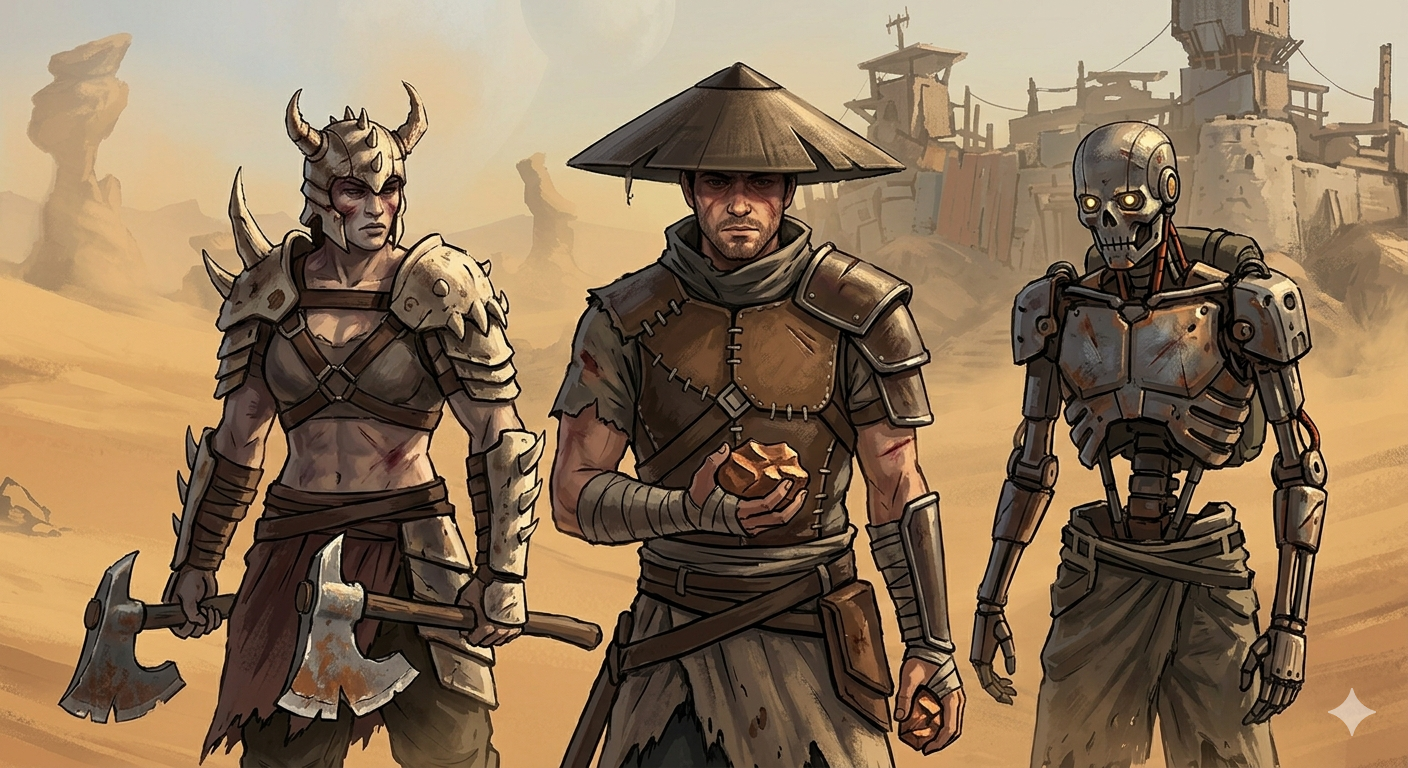
The moon of Kenshi is divided into zones of influence, each as distinct as the philosophies of their rulers. To survive here, you must understand the rules of others before you can begin to establish your own.
The Holy Nation: Faith, Light, and Iron Exclusion
The Holy Nation occupies the most fertile land in the world, the "Pride of Okran." However, this abundance of water and food comes with a heavy social price. Ruled by Holy Lord Phoenix LXII, a figure seen as the direct reincarnation of their god, this is a realm of theocratic totalitarianism.
- The Line of Reincarnation: The current Phoenix was taken from his parents as an infant and raised in isolation. This system erases individuality to ensure an eternal, unchanging leadership.
- The Okran-Narko Dualism: Citizens believe in Okran, the god of light. Anything that does not fit the human, male norm is seen as corrupted by the dark goddess, Narko.
- The Fear of the Machine: Skeletons are viewed as the personification of evil. Anyone wearing a prosthetic limb is considered "unclean." The Holy Nation rewrites history, using the fear of the past to cement its current power.
The Shek Kingdom: Bone, Honor, and the Thirst for Battle
The Shek are a race of horned humanoids covered in bone-like plates. They live for combat and despise what they perceive as weakness.
- The Stone Golem’s Reforms: Under their current leader, Esata the Stone Golem, the Shek are attempting a dangerous balancing act. While their ancestors led them into suicidal wars, Esata tries to preserve their pride without leading the race to extinction.
- The Shame of Survival: In traditional Shek culture, a warrior who survives a battle where their leader fell is "dehorned." Esata is fighting to break this destructive code, understanding that a people who only celebrate death have no future.
The United Cities: Wealth Built on a Foundation of Chains
The United Cities in the east and south may seem like the most civilized faction. Inspired by feudal Japanese culture, trade in katanas, sake, and silk flourishes here. But behind the grand facade of Emperor Tengu lies a system of pure cruelty.
- The Crime of Poverty: In the United Cities, it is illegal to be poor. If you have no money or look starving, slave hunters will seize you. Wealth is seen as a divine right, while poverty is punished as a character flaw.
- The Underground Rebellion: There is a massive contrast between the palaces of Heft and the misery of the slave farms. This has led to the rise of the Anti-Slavers, led by the legendary Skeleton martial artist Tinfist, who fights to topple the empire by liberating its workforce.
The Hive: The Collective Survival
Hivers are perhaps the most alien species in Kenshi, living in a strict hierarchy controlled by a Queen.
- West vs. South: While the Western Hive are eccentric traders, the Southern Hive is highly aggressive, viewing all other species as sacrifices for their own dark sovereign.
- The Tragedy of the Hive-less: When a Hiver loses their connection to the Queen's pheromone network, they are exiled. These "Hive-less" often wander the world alone, struggling to endure the silence in their heads, as they were never meant to be individuals.
Echos of the Past: Skeletons and the Forgotten Empire
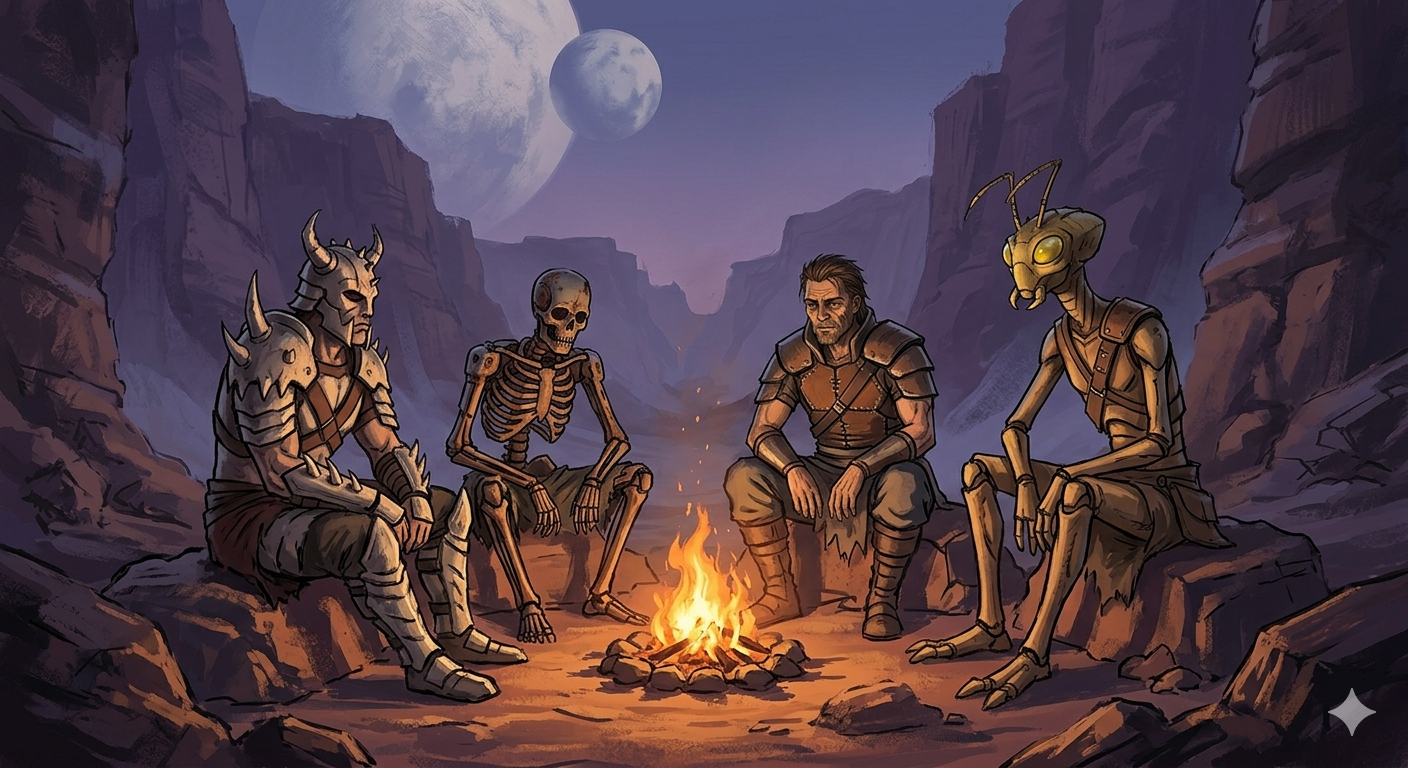
While humans, Shek, and Hivers struggle to survive the present, the Skeletons (mechanical beings) carry the weight of millennia on their metallic shoulders. In Kenshi, machines are not mere tools; they are the living witnesses of two world extinctions.
The Burden of Immortality
A Skeleton can theoretically live forever, but the storage space in their mechanical brains is finite. To avoid madness or the crushing weight of traumatic memories, many choose to delete their storage – a process known as Resetting.
- The Melancholy of Machines: Those who refuse to reset often retreat to Black Desert City, a place of constant acid rain. There, they sit in somber bars, mourning a world they helped destroy.
- The Code of Silence: Skeletons rarely speak of the past. When you interact with them as a fellow Skeleton, you often find cryptic hints that they feel responsible for the current state of humanity.
Mad Cat-Lon and the Tragic Failure of the Second Empire
Deep in the southeast, within the ash-covered wastes of the Ashlands, sits the most tragic figure in Kenshi lore: Mad Cat-Lon.
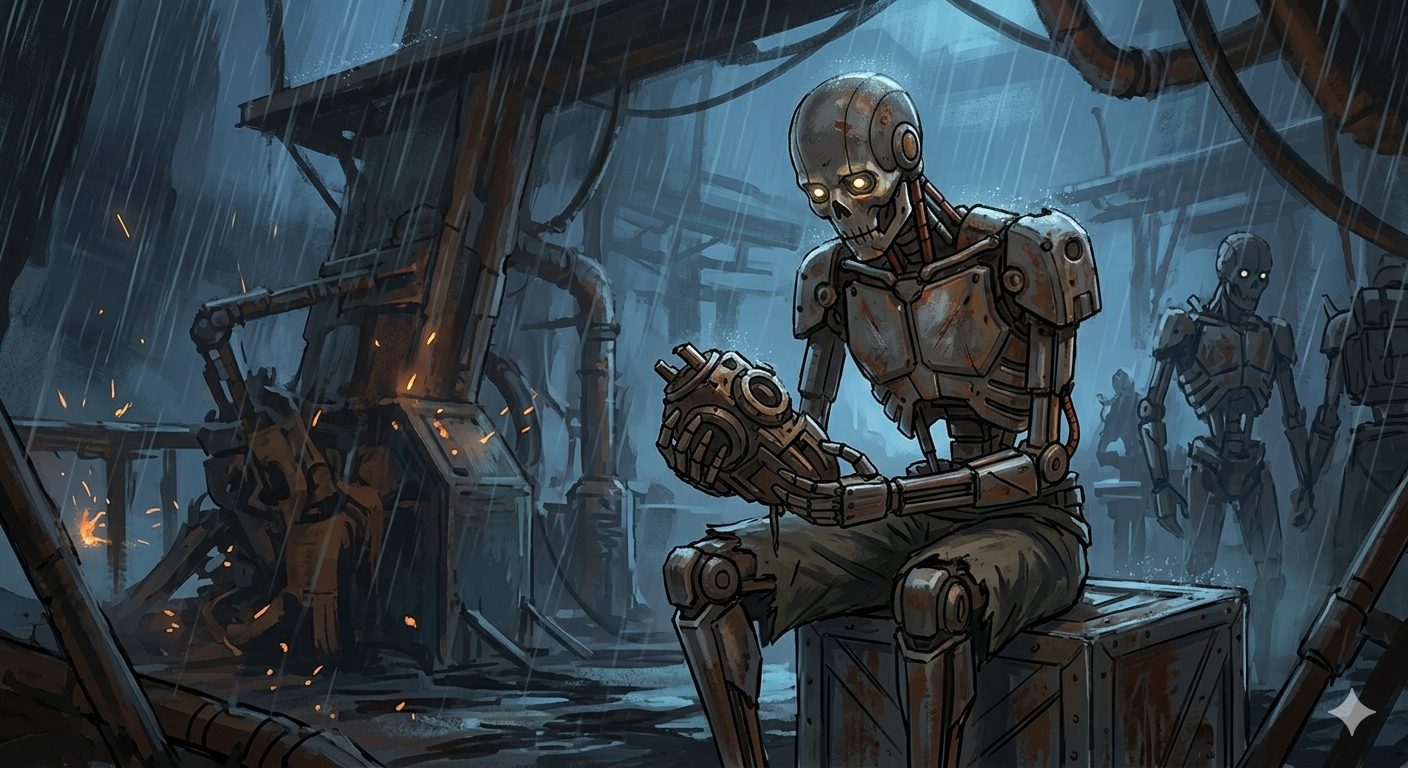
Once, Cat-Lon was not a mad tyrant but the leader of the Second Empire. His goal was noble: he wanted to save humanity from extinction after the collapse of the First Empire. He built cities, protected the weak, and tried to bring order to the chaos. But humanity eventually rebelled against the rule of a machine.
- The Descent into Madness: To maintain order, Cat-Lon resorted to increasingly drastic measures. He established re-education camps and eventually led the "Hydraulic Knights" to crush uprisings. In the end, he became the very monster he sought to prevent.
- The Throne of Abuse: Today, he sits on his throne, surrounded by thousands of Thralls (Skeletons whose heads and free will he removed). He waits there for the end of the world, convinced that humanity can never survive without the guidance of machines. He is a monument to how good intentions can corrupt under the weight of absolute power.
The Mystery of the First Extinction
Traveling through Kenshi reveals giant skeletons of god-like beings or massive space weapons sticking out of the ground like the eyes of giants.
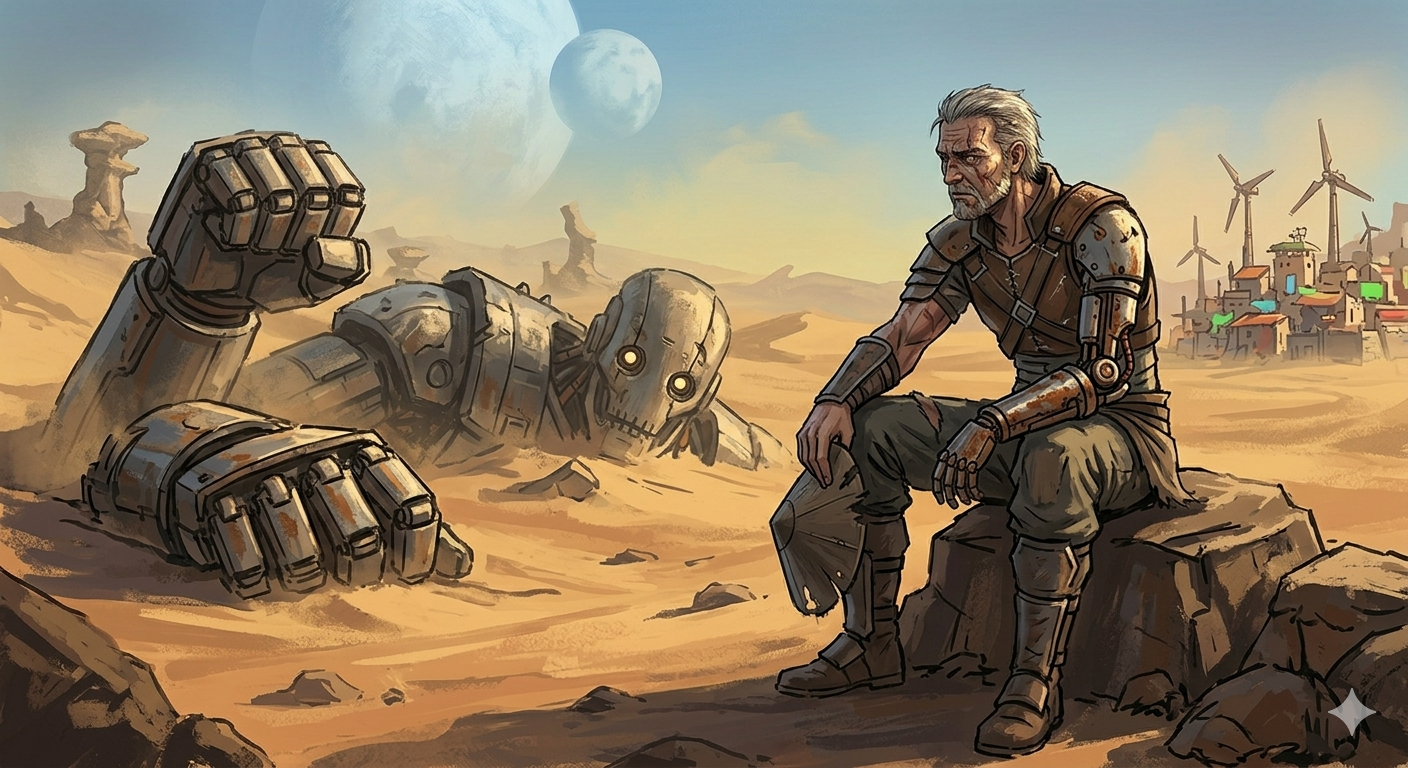
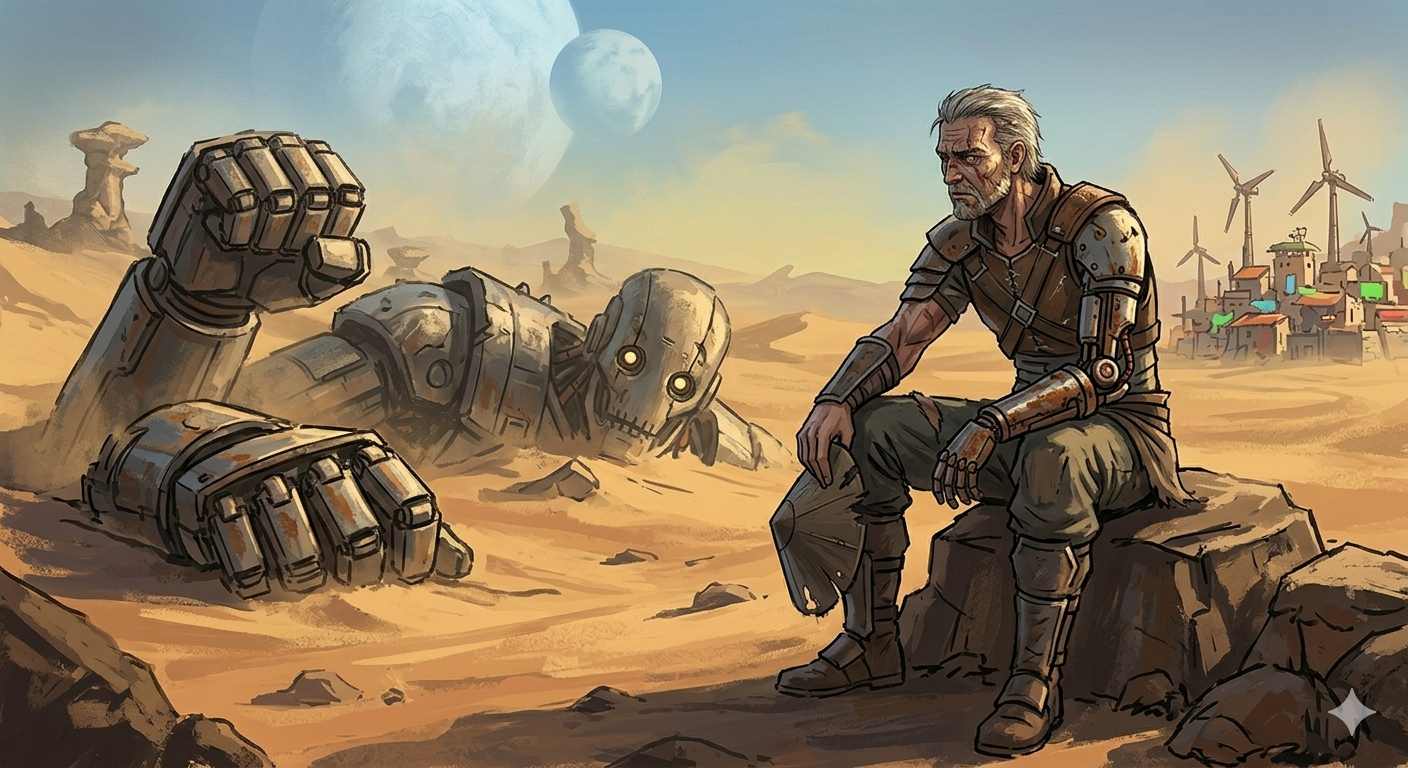
- The Behemoths of Obedience: In the region of Obedience, massive mechanical arms reach out from the earth. These are the remains of the Behemoths, giant Skeletons built for war by the First Empire. When humans grew afraid of their own creations, they ordered the Behemoths to lie in a pit and be filled with molten metal. The machines obeyed blindly, an act of ultimate betrayal by the creators against their creations.
Building Your Empire: Sovereignty Amidst the Chaos
Building a base in Kenshi is more than just a strategic gameplay element; it is an open challenge to the existing world order. The moment you drive your first stake into the ground, you stop being a ghost and start being a target. You are claiming a piece of the world for yourself, and the world will respond with taxes, prayers, or blades.
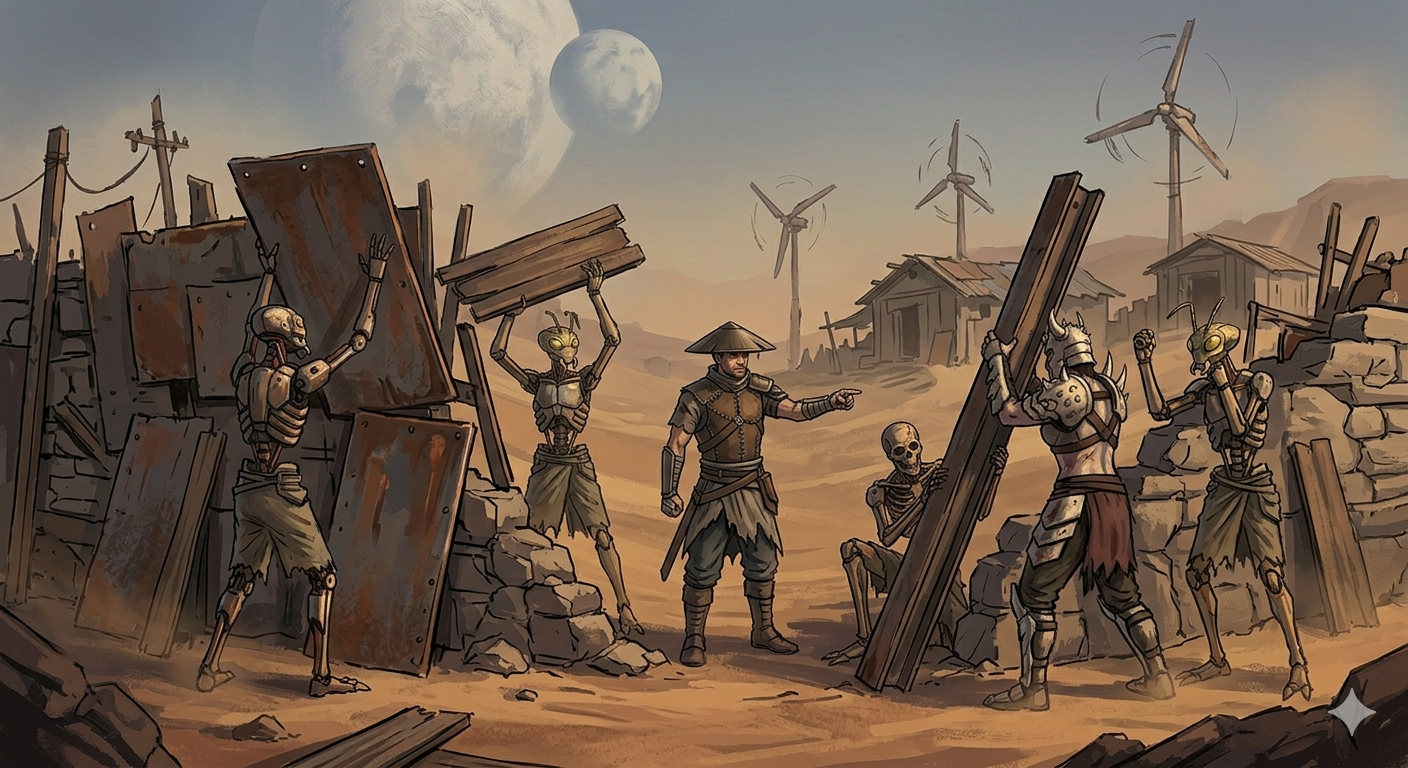
Geography as Destiny: Choosing Your Battleground
Your choice of location is the most important decision of your campaign. Every region comes with its own ecosystem of resources and political dangers.
- The Fertile Trap: Settling in Holy Nation territory offers green land and plenty of water. However, you pay for this luxury with your freedom. If you build here, you are part of their religious system, whether by choice or by force.
- The Harsh Freedom: In regions like "The Shem" or "Stobe’s Gamble," resources are harder to manage, but you are far from the reach of grand armies. Here, your enemies are wild beasts or roaming bandits rather than corrupt nobles or fanatical inquisitors.
The Cost of Order: Prayer Days and Tax Audits
If you build within the sphere of influence of a superpower, you must play by their rules. Kenshi uses fascinating social mechanics to define the pressure of leadership.
- The Prayer Day (Holy Nation): Every week, inquisitors will knock at your gate. This is not optional. You must place a human male at the front, hold a copy of "The Holy Flame," and pray with them. One wrong word, a hidden Skeleton, or a woman who dares to look the Inquisitor in the eye, and your village will be reduced to ash.
- The Tax Collectors (United Cities): Here, only "Cats" (currency) matter. If you look wealthy, the collectors will come. If you cannot pay, you are enslaved for debt. It is a cold, calculated system that leaves no room for mercy.
- The Tribute (Shek Kingdom): The Shek do not want prayers or money; they want food. They take what they need to fuel their war against the Bugmaster. If you refuse, you must prove your worth in combat.
Managing the Collective: More Than a One-Man Show
Kenshi allows you to lead an entire army, and managing this group is like programming a complex operating system. You must assign roles, set up automations, and ensure supply chains remain unbroken.
- Specialization as a Survival Advantage: Every character in your base is a gear in the machine. You need farmers to tend the hemp and wheat, engineers to reinforce the walls, and smiths to hammer out katanas for your city guard.
- The Dynamics of Defense: When a raid is announced, the game shifts into a real-time strategy mode. Your turret gunners must be in position, and your gates must be locked. This is the moment where you see if your system is stable enough to withstand the pressure of the world.
Why We Fight for This Land
Interacting with these factions reveals the true meaning of sovereignty. It is not about living without rules; it is about being strong enough to defend your own. Every time you survive a Prayer Day or fend off a tax raid, you solidify your place in this world. You are not just building a village; you are constructing your own identity in a world that had long ago given up on you.
The Modding Ecosystem: Hardware Upgrades for Your Sandbox
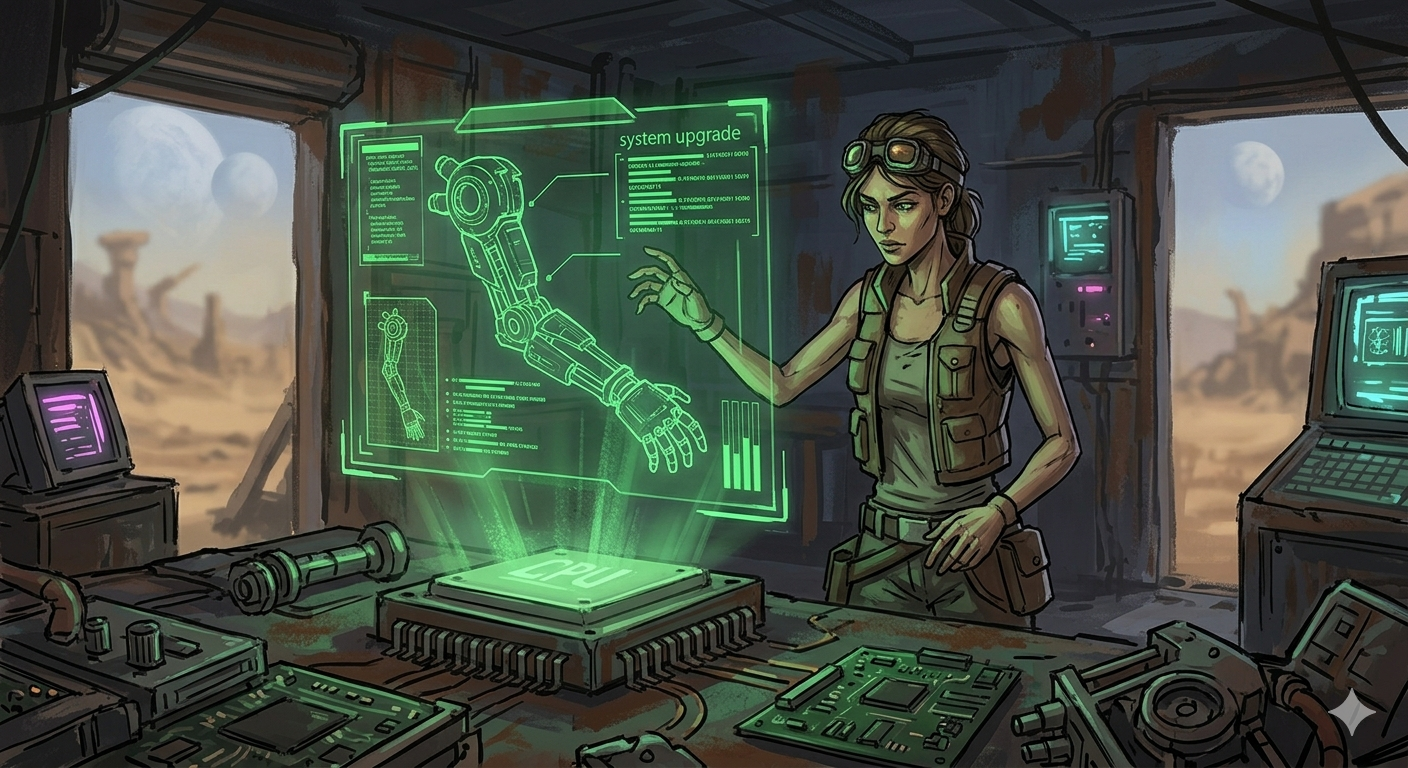
The Kenshi modding community is the beating heart of the game. Without the countless passionate developers on the Steam Workshop and Nexus Mods, the game would not be the infinite epic it is today. In the world of Kenshi, mods are like essential system patches that expand the framework, fix bugs, and unlock entirely new mechanics.
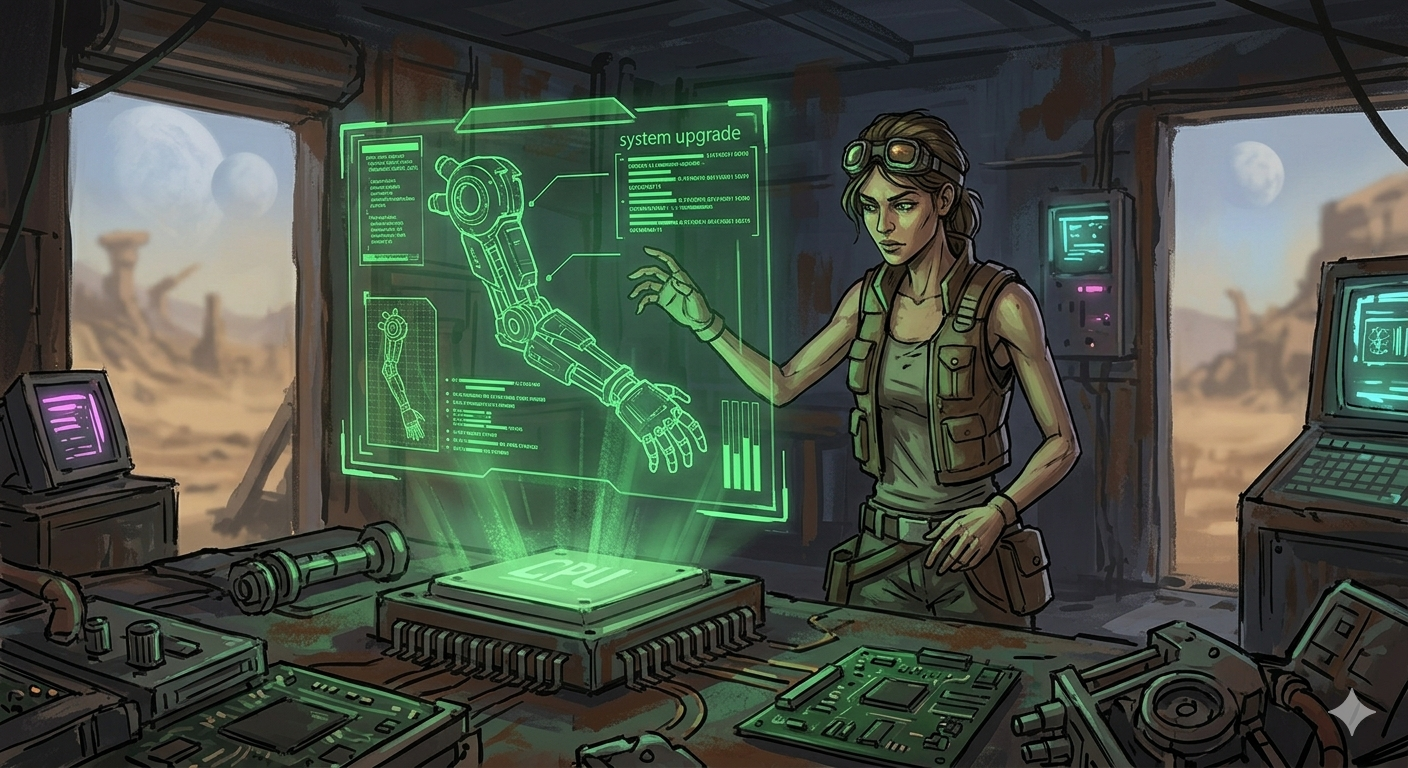
1. Recruit Prisoners: The Diplomatic Conquest
This is perhaps the most famous mod in the community. In the base game, you can lock prisoners away, but you can never convince them to join your cause.
- The Mechanic: This mod allows you to interact with prisoners in your cages. Through dialogue, bribery, or sheer force of will, you can recruit almost any NPC—from simple hungry bandits to powerful Inquisitors—into your squad.
- Why it matters: It allows you to build an army from your former enemies and adds a layer of strategic depth to the prison system that the base game lacks.
2. Reactive World: A Living Ecosystem
In the vanilla version of Kenshi, some victories can feel hollow. Killing a leader often has little impact on the map. Reactive World changes this fundamentally.
- The Impact: If you topple the Holy Lord Phoenix, the empire does not just vanish. Civil wars break out, splinter groups fight for power, and the map changes dynamically.
- The Search Intent: Players seek this mod to ensure their actions have real, tangible consequences. It makes your choices meaningful.
3. Genesis: The Ultimate Total Conversion
For those who know Kenshi inside and out, Genesis is the next level. It is a massive collection of mods bundled into one stable package.
- Content: It features new cities, hundreds of new NPCs, overhauled textures, and entirely new factions. It feels like an unofficial "Kenshi 1.5."
- System Load: Because Genesis expands the game so massively, it is a true "stress test" for your PC, but it offers the deepest experience possible.
4. Performance & Quality of Life Patches
Kenshi is notorious for its long loading times and sudden stutters. Modders have provided the necessary "Performance Boosts":
- Compressed Textures Project: This reduces the file size of textures without significantly hurting the visuals, resulting in much faster loading times and stable FPS.
- Slopeless: Anyone who has tried to build a wall on a hill knows the frustration of crooked buildings. Slopeless allows you to place structures perfectly level, regardless of the terrain slope.
The Architecture of Resilience: Why Our Minds Crave the Dust
Why do we spend hundreds of hours in a world that hates us? Why do we choose a simulation where we are enslaved, beaten, and left for dead? The answer lies deep within our psychology. Kenshi is not just a game; it is a laboratory for radical self-efficacy.
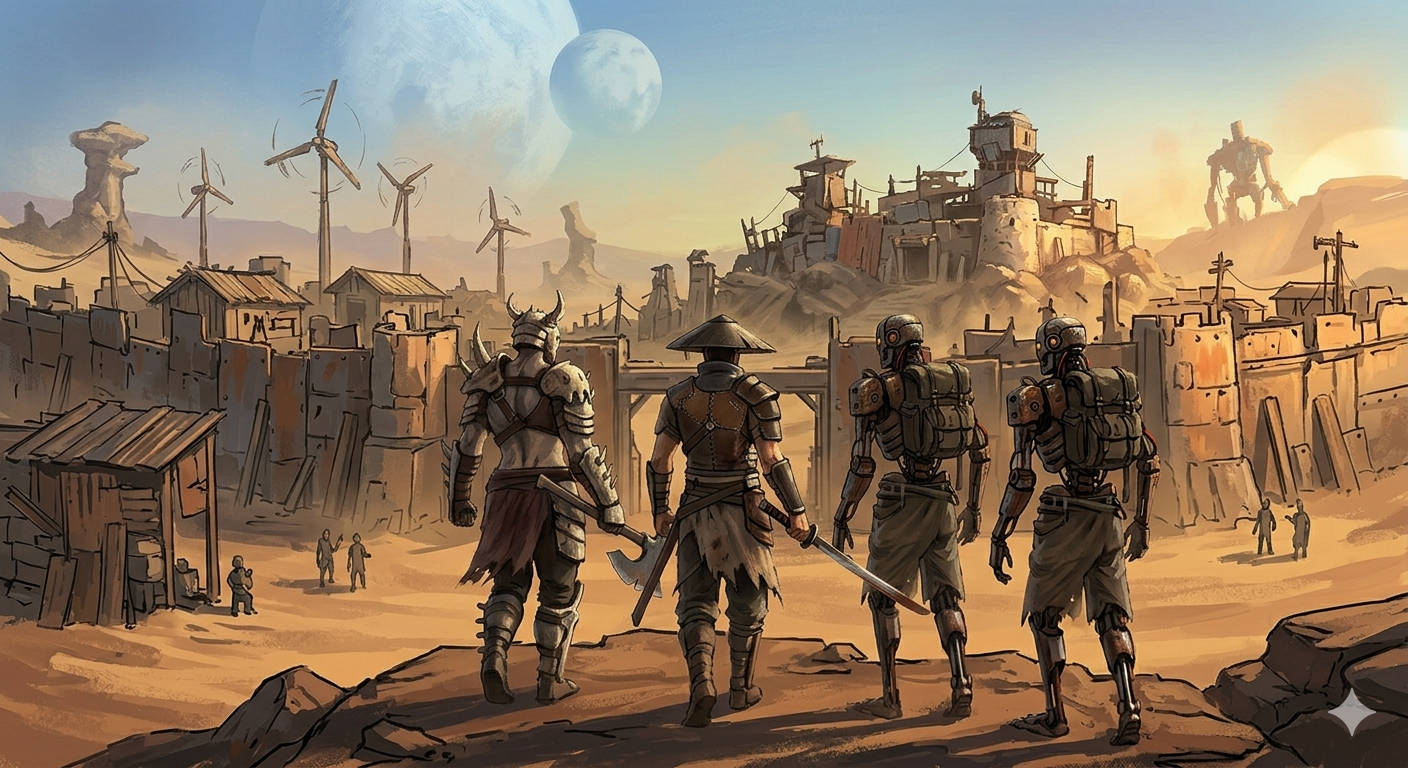
The Privilege of Being Nobody: Psychological Decompression
In our modern world, we often carry a heavy backpack of external expectations. we are told to be "someone," to have a career, and to function perfectly. Kenshi strips this script away immediately.
By throwing us into the dust as an absolute "nothing," the game grants us a rare psychological freedom: the freedom to start from zero. When you have nothing and are no one, there is no further to fall. Every tiny act, every gram of copper you sell, becomes a genuine, personal victory. It is the purest form of the "Level-Up Mindset" because no external status distorts your progress.
The Logic of Pain: Why We Need Defeats as "Buffs"
In psychology, we speak of Resilience as the ability to bounce back after a crisis. Kenshi makes this ability measurable.
- Emotional Efficiency: We learn that a defeat is not an end state but a necessary data source. When your squad is defeated by slave hunters, it feels like a system crash at first. But soon after, the analysis begins: What was the bug in my strategy? How can I optimize my system?
- Real-World Toughness: Kenshi trains us to see pain not as a signal to give up, but as the necessary friction that hardens us. It is a digital workout for our frustration tolerance. If you learn to carry on in Kenshi with a missing limb and no food, you begin to look at the challenges of everyday life with a calmer, more analytical eye.
The Philosophy of Sovereignty: Your Own Compass
At its core, Kenshi is an existentialist masterpiece. The world offers you no meaning. The Holy Nation offers security through submission, while the United Cities offer luxury through exploitation. But neither faction offers you fulfillment.
The allure of Kenshi lies in constructing your own meaning in an entirely indifferent environment.
- Self-Ownership: When you decide to build a city for the hive-less, you don’t do it because a quest marker demands it. You do it because it aligns with your values.
- The Sovereign Path: In a world full of "noise", the clamor of factions and ideologies, you learn to find your own frequency. Kenshi is the ultimate exercise in not letting the systems around you define you, but instead creating a system stable enough to withstand the world.
Final Conclusion: The Ink of Your Story Never Dries
Ultimately, Kenshi is a mirror. It doesn't show you who you are when things go well, but who you are when you are bleeding in the dirt. It reminds us that we are the architects of our own journey. The world may give us maps drawn for other people’s feet, but we have the power to burn those maps and draw our own path through the sand.
Kenshi teaches us: You don’t need permission to be great. You only need the toughness to get up one more time than you fell.
Go into your world today with this thought. Be the pathfinder of your own story. Start small, stay tough, and trust that you possess everything you need to walk your own Sovereign Path.
Credits & Inspiration
This article was fueled by our love for Kenshi by Lo-Fi Games Ltd.
The visual journey was created with AI support specifically for Candyscape.world to illustrate the world, but this fan art is based on the designs of Lo-Fi Games Ltd's game Kenshi.
These are not original game assets, so they may differ from the source material.
All original designs and intellectual property belong to the respective studio.