The Power of Walking: Your Upgrade for Body and Mind


The simple act of moving forward and its profound impact on your system. In this exploration, we decode the power of walking. We will explore why it’s the fundamental upgrade for your body and mind to clear the cache and find your rhythm.
Whether you prefer to read or listen, the choice is yours. You’ll find the audio version right below.
Click play and dive in at your own pace.
🎧 Listen to the article(AI-generated voiceover)
Imagine there was a technology that was completely free, required no installation, and immediately began maintaining your hardware while soothing your software. We’ve carried this capability within us for millennia, yet in the noise of modern life, we’ve almost forgotten it. Often, we view walking only as a means to an end, the functional path from the parking lot to the office or the necessary movement from the couch to the fridge.
But simple walking is one of the most powerful tools for self-development at our disposal. It is the moment we leave the frantic "reactive mode" that dominates modern life. In a world that constantly demands we solve problems instantly, respond to digital stimuli, and remain permanently reachable, walking offers us a protected space. It is an invitation to turn off the autopilot and restore a genuine, analog connection to ourselves.
Walking isn’t about reaching a distant destination. It’s about what happens to you while you’re on the move.
The Physical Layer: What’s Happening Under the Hood
Walking may seem unremarkable, but for our biology, it is a highly complex maintenance routine. It’s like starting a system in "Safe Mode": everything runs quietly, stably, and highly efficiently while important updates are installed in the background.
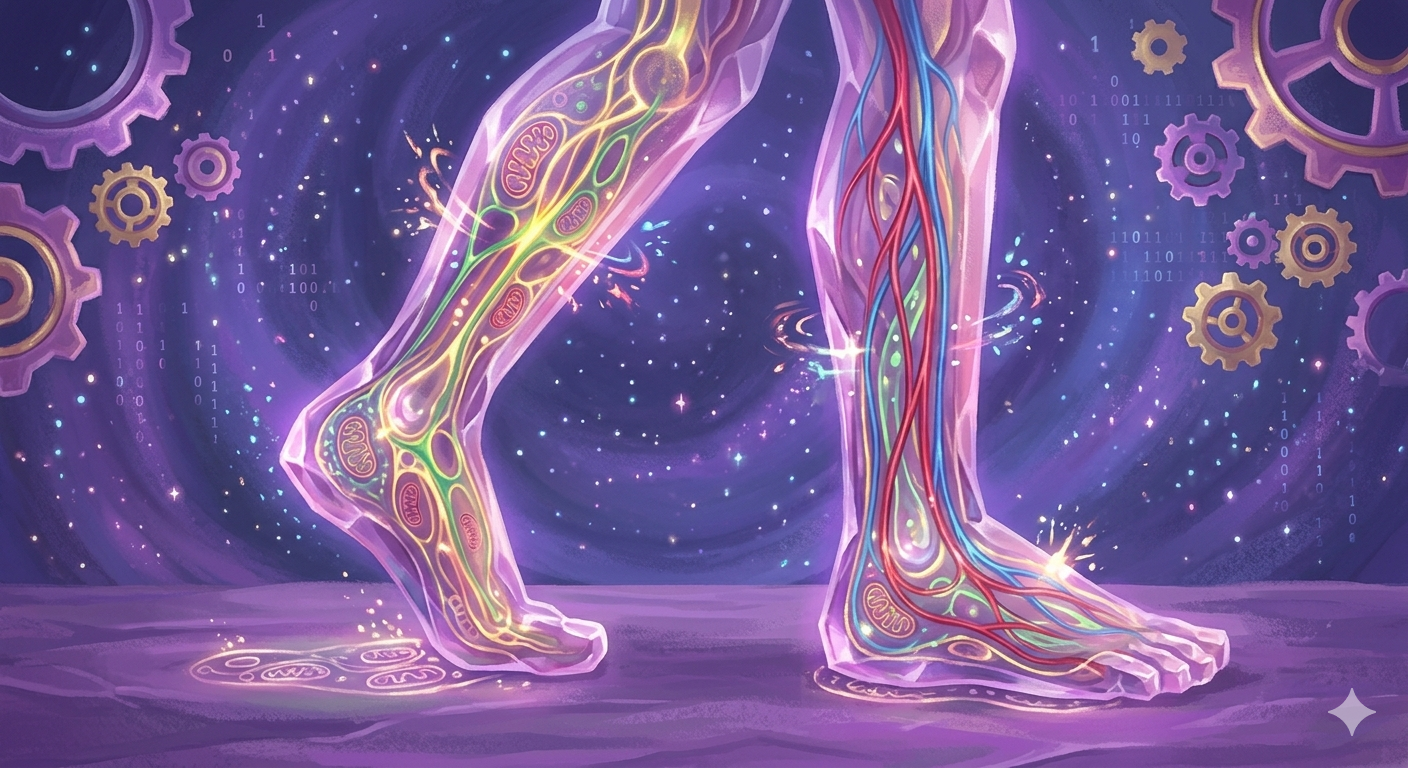
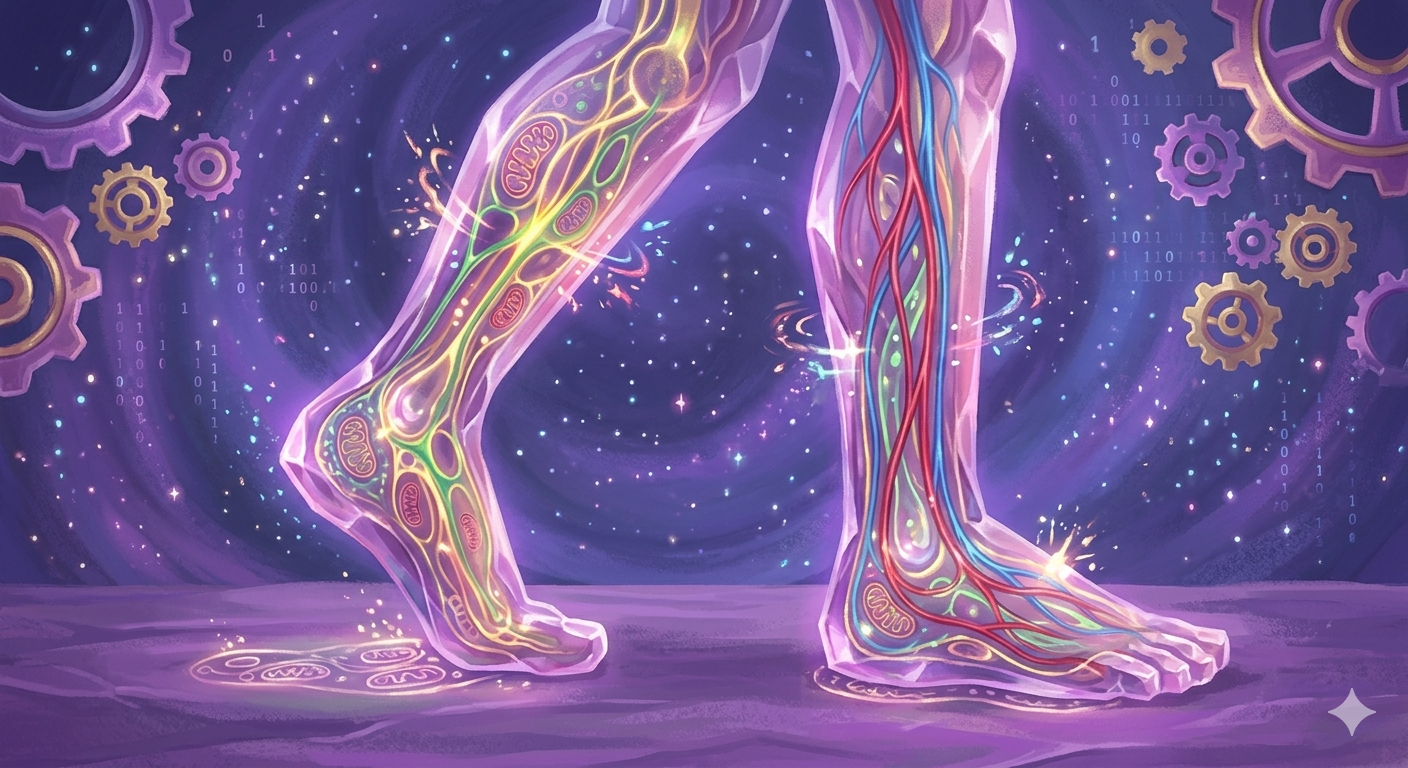
- The Miracle of Synergy: The moment you take your first step, your body begins an impressive choreographic performance. Almost every muscle group, from the stabilizing core muscles to the fine tendons in your feet, is activated to keep you upright and moving rhythmically forward. What’s special is the gentle intensity. Unlike heavy training, which often puts the body under physical stress and releases cortisol, walking keeps everything in the "green zone." Your joints are gently "lubricated" as the alternating load presses synovial fluid into the cartilage. It’s a natural rejuvenation treatment for your skeletal system that keeps you mobile in the long run.
- Metabolic Flow and the Oxygen Update: Scientifically speaking, walking is a brilliant regulator. It helps the body stabilize blood sugar levels and optimize energy utilization. But it’s about far more than just burning calories: improved circulation and deeper breathing flood every single cell, all the way up to the complex networks of your brain, with fresh oxygen. This process acts like a real-time "resource update." Your brain receives more energy, increasing your ability to concentrate without draining your system.
- Regeneration as System Standard: Walking also supports the active recovery of the nervous system. If you feel physically heavy or mentally "foggy" after a long day, this moderate flow of movement helps clear blockages. Movement allows metabolic waste products to be transported out of the tissues more quickly. It is the most natural way to remind the body that it is a living, dynamic system, not a static object constructed solely for a life behind screens.
The Cognitive Layer: Walking Between Worlds
When we move physically through space, something starts to flow within us as well. It’s no coincidence that human history has been shaped by thinking wanderers. Walking is perhaps the oldest and most effective method for reorganizing the "source code" of our thoughts and patching creative blocks.

- The School of the Wanderers: Even in ancient Greece, the synergistic power of step and spirit was recognized. Aristotle founded the famous Peripatetic school. This name is derived from the Greek word for "walking about." Aristotle didn't teach his students in cramped rooms, but while they strolled together through the shaded colonnades of the Lyceum. He instinctively understood that linear movement on the outside supports structured thinking on the inside. When the body finds a steady rhythm, it becomes easier for the mind to bring logic to complex problems and weave loose threads into a whole.
- Nietzsche and the Freedom of the Spirit: Centuries later, the philosopher Friedrich Nietzsche took this idea to the extreme. He held the provocative view that sitting was the actual sin against the spirit. For him, only those thoughts "born in the open air" were truly alive. Walking breaks the mental stagnation that occurs when we fixate on a single point for too long. It frees us from mental "cobwebs." Every mile we walk is an active upgrade of our perspective: we leave stuck thought patterns behind and quite literally create room for new ideas.
- The Psychology of Space and Grounding: Philosophically, walking is an act of reclaiming the world. While digital life often pulls us into an abstract world, every step connects us back to physical reality. You’re using your "avatar" to explore the planet, feel the wind, and perceive the ground beneath your feet. This sense of autonomy and self-efficacy is a powerful shield for the psyche.
It is also scientifically proven that the rhythmic stimulation of walking synchronizes both hemispheres of the brain. This helps process emotional overload. It’s like clearing an overloaded RAM, worries that seemed insurmountable just moments ago move into a healthy distance. You "walk off" the problems until they lose their edge and your vision becomes clear again.
Integration & Outlook: Your Path, Your Pace
The beauty of walking is its radical accessibility. There are no "minimum requirements" other than the decision to start. You don’t need a high mountain or a lonely forest path to feel the positive effects.
The Reflection Space: Home
If you’re deep into a topic or need to digest complex information, walking back and forth rhythmically in your familiar surroundings is just as valuable. It creates a private space for reflection where you can briefly shut out the world. A treadmill is also a legitimate tool, it serves as a mechanical pacer for your system while you perhaps immerse yourself in an audiobook or a new idea. It’s never about the scenery; it’s always about the process triggered inside you.

Small Patches, Big Impact
You don’t have to overhaul your life to benefit from the power of walking. Often, it’s the small "micro-walks" that make the biggest difference. Ten minutes of conscious walking after a stressful phase can be enough to recalibrate your focus. See it as a form of self-care, a moment of silence where you don't have to react, but simply exist. You decide the direction, the pace, and the duration.
Your upgrade is waiting.
Walking is the most honest and direct form of self-development. It’s an update you can give yourself anytime, anywhere. It strengthens your foundation, clears your mental fog, and reconnects you with your own innate power. In a world that often demands we stand still while racing past us at a breakneck speed, taking a conscious step forward is a small but powerful act of freedom.
Are you ready for your next important step?