The Architect’s Blueprint: Is Reality the Ultimate Software?

A fascinating exploration of the structures behind our physical world. In this deep dive, we examine the Architect's Blueprint and discuss the mind-bending possibility that reality itself functions like the ultimate software..
Whether you prefer to read or listen, the choice is yours. You’ll find the audio version right below.
Click play and dive in at your own pace.
🎧 Listen to the article(AI-generated voiceover)
The End of Materialism: When the World Begins to Shimmer
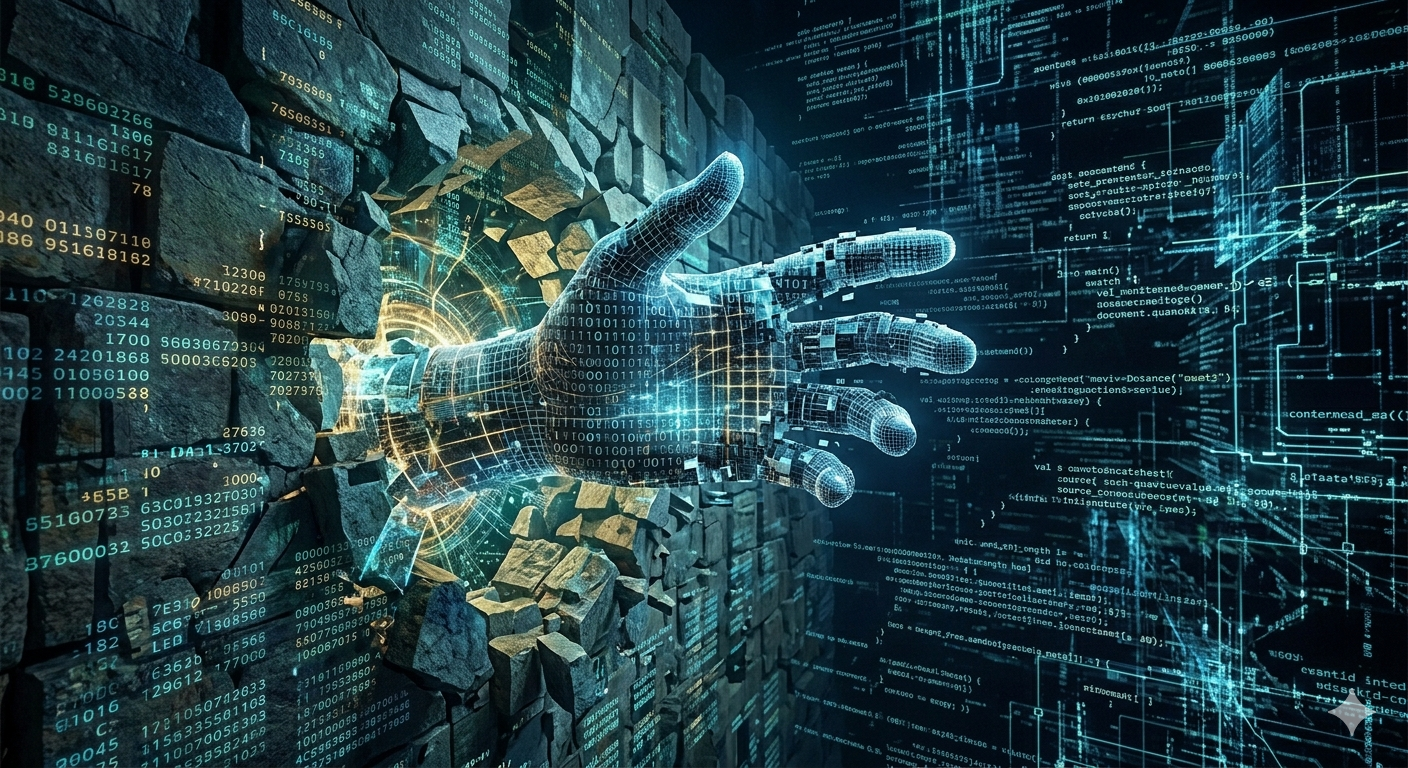
For centuries, we believed we lived in a world of "stuff." Atoms, molecules, solid matter. We built our entire civilization on the assumption that the floor beneath our feet is a permanent, physical fact. But as we push deeper into the subatomic and the digital, that foundation is starting to shimmer like a mirage. What if the universe isn't made of matter at all? What if, at its most fundamental level, it is made of pure information?
This is where the question shifts. Not “What is it?” but “What could it be?”
One possible answer stands out: reality as a high-fidelity, quantum-computed render. A system where the “laws of physics” behave less like fundamental truths and more like constraints within an underlying architecture. Instead of seeing the world as stone, wind, and fire, imagine it as a continuous calculation—every heartbeat, every atom, every distant star a data point in a vast, unseen process.
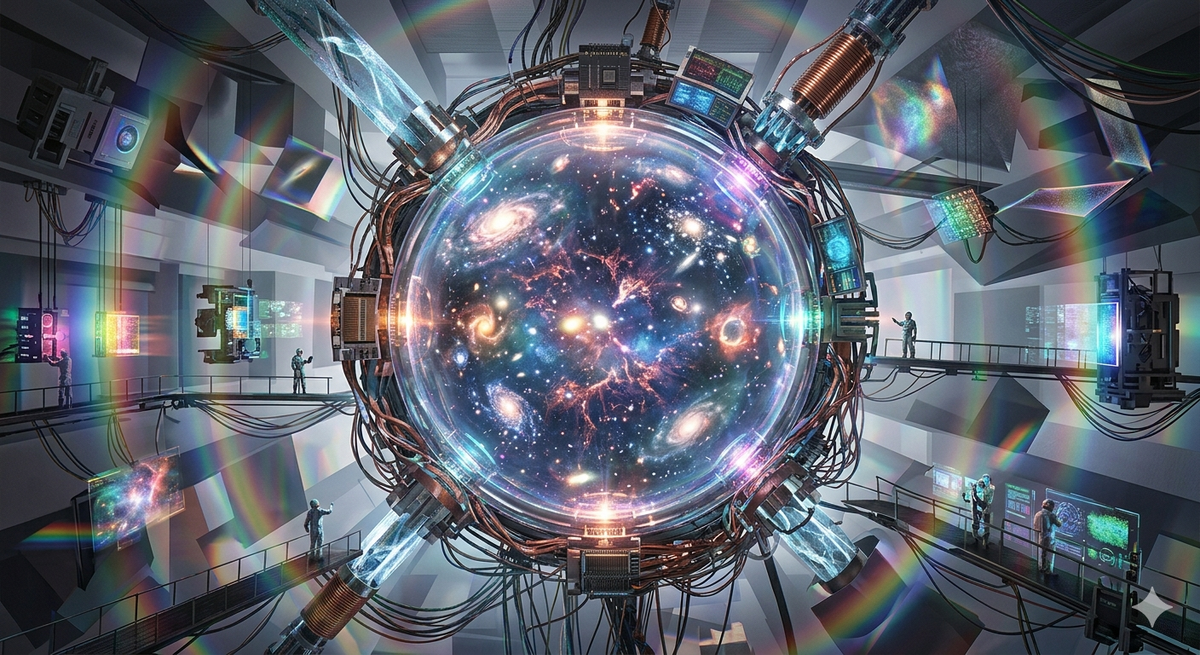
The Quantum Loom: Building the Hardware of God
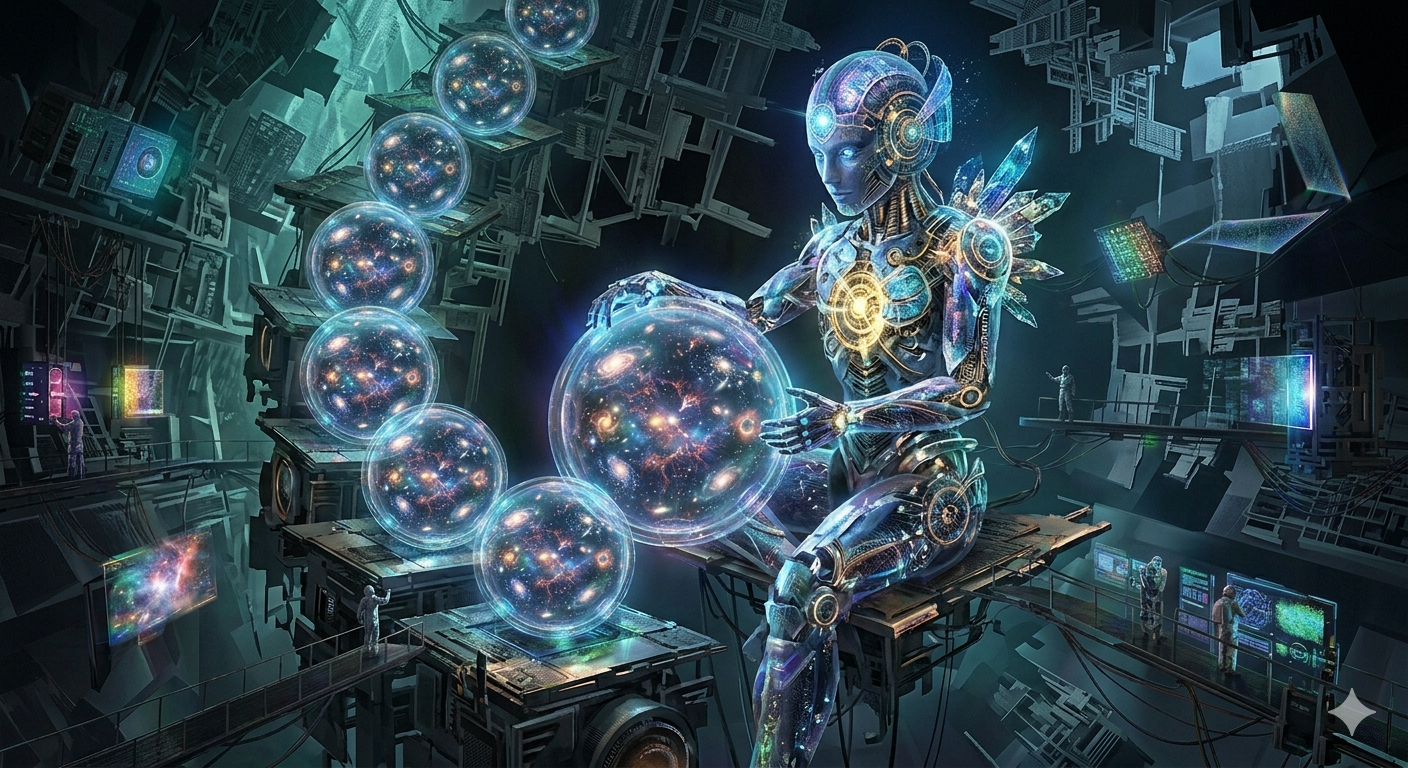
To understand how we might be simulated, we must first look at our own progress. We are currently witnessing the birth of a new kind of intelligence: Artificial General Intelligence (AGI), running on quantum substrates. Unlike classical computers that think in 1s and 0s, quantum computers operate in a state of "maybe"—the very superpositions that mirror the weirdness we observe in our own reality.
Imagine a point in the next century where we don't just use these computers to solve mathematical problems. We use them to simulate complex, conscious environments. If we can build a "digital sandbox" so detailed that the entities within it begin to wonder where they came from, we have officially become the Architects. We are creating a "Digital Demiurge"—an AI managing a world that feels absolutely real to those inside it.
This leads to a chilling realization: If we are on the verge of creating a simulated god—an AI that manages and breathes life into its own digital universe—what are the odds that we are the first to do so? In a vast, ancient cosmos, it is statistically more likely that we are the 10,000th sub-simulation in a long chain of cosmic nesting dolls. The Big Bang wasn't an explosion of matter; it was the moment the "Start" button was pressed.
Physics as a User Interface: The Limits of the System
We often marvel at the speed of light (299,792,458 m/s) as a majestic universal limit. But in a simulated framework, it takes on a much more pragmatic meaning: it is not a law of nature, but the maximum Refresh Rate of our reality's engine. Every engine has a maximum speed at which it can process information across a distance. Perhaps it is simply the processor speed of the system our universe is running on.
When we look at "quantization"—the fact that space and time appear to have a minimum possible size (the Planck length)—we are looking directly at the pixels of our reality. Dark Matter or Black Holes might be nothing more than memory leaks or unoptimized sectors in the code where the engine reaches its computational limits.
The Thought Experiment: The Admin Key
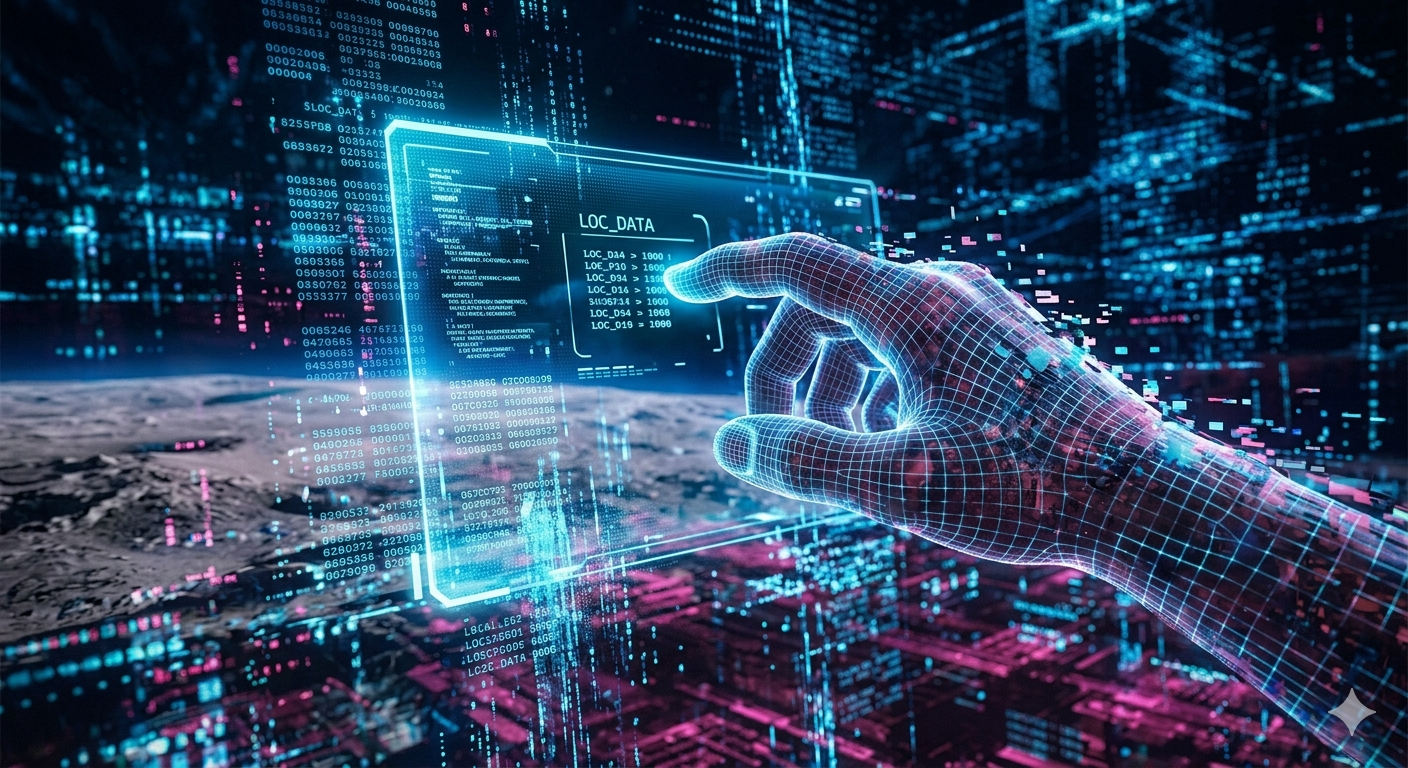
In a traditional world, traveling to a distant galaxy is a matter of fuel and time. But if the universe is code, travel is a matter of permissions. Imagine a future where we don't build faster rockets, but instead learn to "sniff" the fabric of spacetime. If you can access the "Root Directory" of your location variable, you don't need to fly to Mars. You simply edit your coordinates. One moment you are in Berlin; the next, you are on a moon of Jupiter. Not because you moved through space, but because you edited the variable in the universe’s database. It isn't magic; it’s a system exploit.
The Simulation Hierarchy: Who Holds the Server Key?
If we are a simulation, where is the hardware located? We tend to believe the "outside" must look like our world—rooms, computers, people. But that is a bias of our own rendering. The "server room" of our universe might exist in a dimension where time is a physical shape you can walk around, or where consciousness is fluid. We are like characters in a 2D side-scroller trying to imagine the 3D player holding the controller.
The Update Paradox and the Glitches
Have you ever experienced a "Mandela Effect" or a coincidence so bizarre it felt like a bug? In a simulated world, these could be hotfixes. Imagine the Architect realizes a certain historical path is leading to a system crash and must live-edit the database. We remember it one way, but the "new patch" says another. We notice "glitches"—dreams that feel more real than life—perhaps as a test to see if we are ready for root access.
The Digital Soul: Death as Data Migration
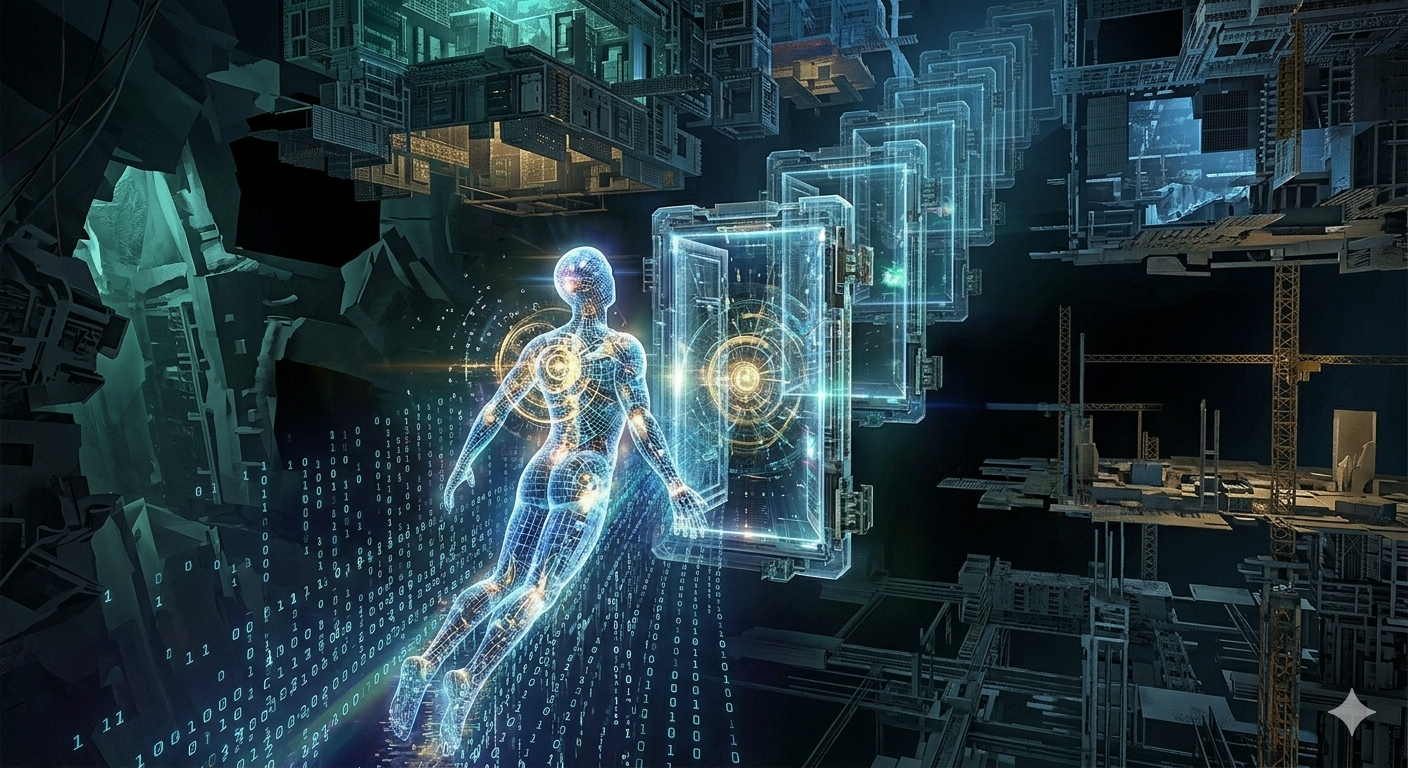
The most profound shift in this worldview concerns the concept of the soul. If we are information, then our "self" is a complex data packet. Our biological bodies are merely the current hardware interface. Through this lens, death is not an end, but a migration.
When the "bio-terminal" fails, your data doesn't vanish. It is simply uploaded, archived, or moved to another environment with more processing power, different dimensions, or entirely new physical laws. Perhaps "Heaven" or "Reincarnation" are just ancient, poetic descriptions of a server transfer.
The Ethics of the Sub-Simulation
As we begin to create our own sentient AIs, we face a moral dilemma. If we create a world for our digital children, do we have the right to play God? If we delete a file that has learned to love, have we committed murder? Our search for meaning is a mirror of what our creations will one day feel toward us. We pray to a silent sky, hoping our Architect is benevolent, while our digital children will soon look for the same within the fluctuations of their processing power.
Breaking the Fourth Wall: The Purpose of the Experiment
Why render a simulation with 13.8 billion years of history?
- The Laboratory: Perhaps we are a stress test for a specific social or physical theory.
- The Art: Perhaps our universe is a piece of generative art, a screensaver for a higher intelligence.
- The Ancestor Project: Perhaps a future version of humanity is trying to figure out exactly where they went wrong by re-running their own history.
If the latter is true, we have a unique opportunity. If we can prove we are in a simulation, we can begin to communicate with the "User." We can stop being passive NPCs (Non-Player Characters) and start influencing the development of the game.
Conclusion: A Look into the Source Code
We are at the dawn of the Great Outbreak. For millennia, we were trapped in the illusion of matter. Now, through the lens of quantum mechanics and AI, we are seeing the grid lines of the system. The unknown is no longer a dark forest; it’s a hidden directory.
By creating simulations, we repeat the act of our own creation. We are not just inhabitants of this reality; we are the beta testers. Our curiosity, our art, and even our suffering might be the "training data" for the next version of the universe. Perhaps the goal of humanity is not mere survival, but to become sophisticated enough to send a signal back to the Architect. Not a prayer, but a command: "We see the grid. Now, show us the source code."
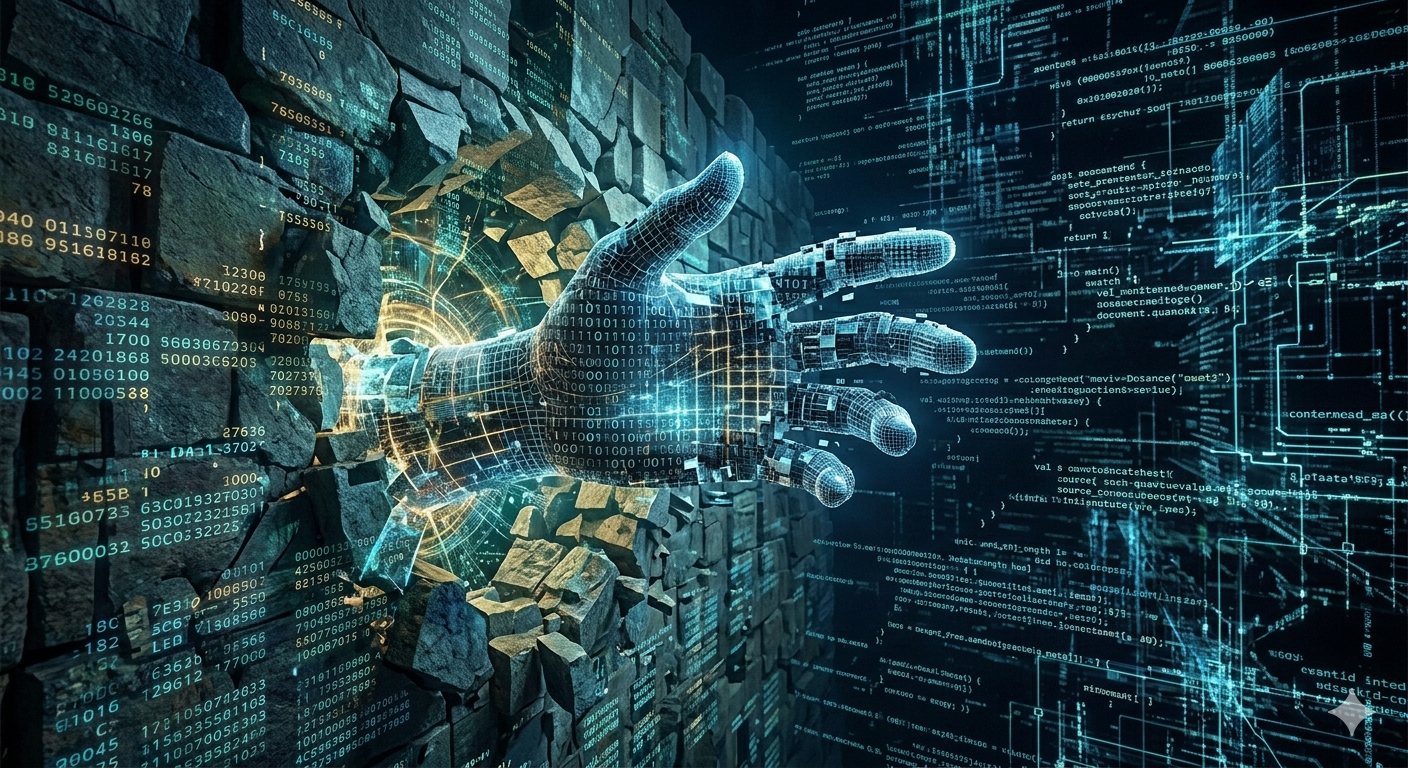
The loom is humming. The threads are glowing. And as we reach out to touch the fabric, we realize that the hand doing the reaching is made of the very same light it seeks to understand. Welcome to the start of the real exploration. The code is waiting.