The Rough School of Khorinis: Why Gothic 2 Remains a Masterpiece of World-Building

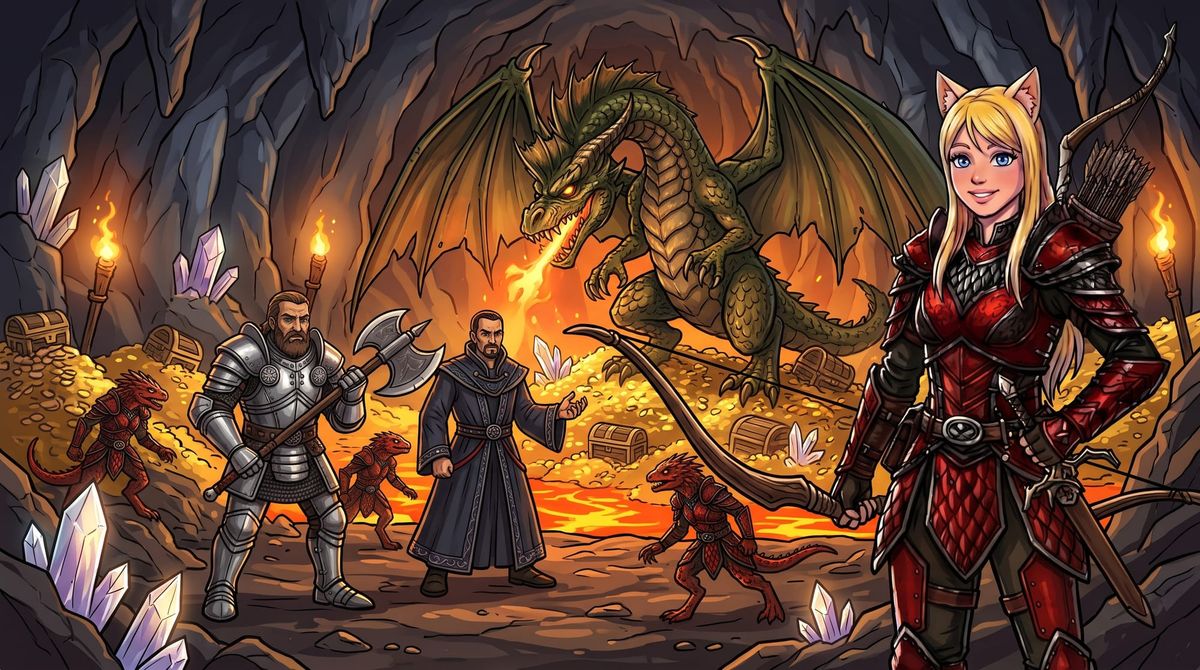
From nameless outcast to forged survivor: A deep dive into the world-building, grit, and enduring soul of Gothic 2.
🎧 The Audio Experience
Whether you prefer to read or listen, the choice is entirely yours.
Click play and dive in at your own pace.
🎧 Listen to the article (AI-generated voiceover)
The Breakout into a Merciless World: Why Khorinis Taught Us Real Respect
The moment the magical barrier collapses at the end of Gothic 1 felt like the ultimate victory. But Gothic 2 chooses a path for its opening that is still considered an absolute stroke of genius in the RPG genre: it denies us the victory ceremony. Instead of riding into the sequel as a celebrated hero, we wake up weakened, almost naked, and without any memory of our old power in the tower of the demon summoner Xardas. Our equipment lies buried under the rubble of the Sleeper's temple. The game forces us into a complete system reset. From a game design perspective, this depowering approach is extremely brave and psychologically incredibly effective.
While role-playing games like The Elder Scrolls almost instantly declare the player the center of the world (as a chosen Dragonborn or prophesied savior around whom the entire universe is constructed), Gothic 2 draws a hard, realistic line. The island of Khorinis does not care about our existence for a single second. We are not a chosen one. We are an emaciated guy in rags who has to defend himself against young wolves with a heavy branch he found. The game treats us completely egalitarian: we are at the absolute bottom of the food chain, and the world exists entirely independent of our actions.
This deliberate disempowerment reshapes our playstyle from the very first minute. When you walk down the path from Xardas's tower into the valley, you immediately learn to scan the environment. A single goblin or a bloodfly by the side of the road is not trivial cannon fodder that we farm in passing, but a potentially deadly risk. We learn to respect the aggro radius of the creatures. We analyze the terrain, look for saving ledges, and plan every step. The game does not hold our hand, it does not give us blinking quest markers that show us the safest path. It demands that we learn to read the architecture of the world ourselves. This merciless openness hardens you. It is not a punishment loop by the developers, but a masterful psychological patch for maximum immersion.
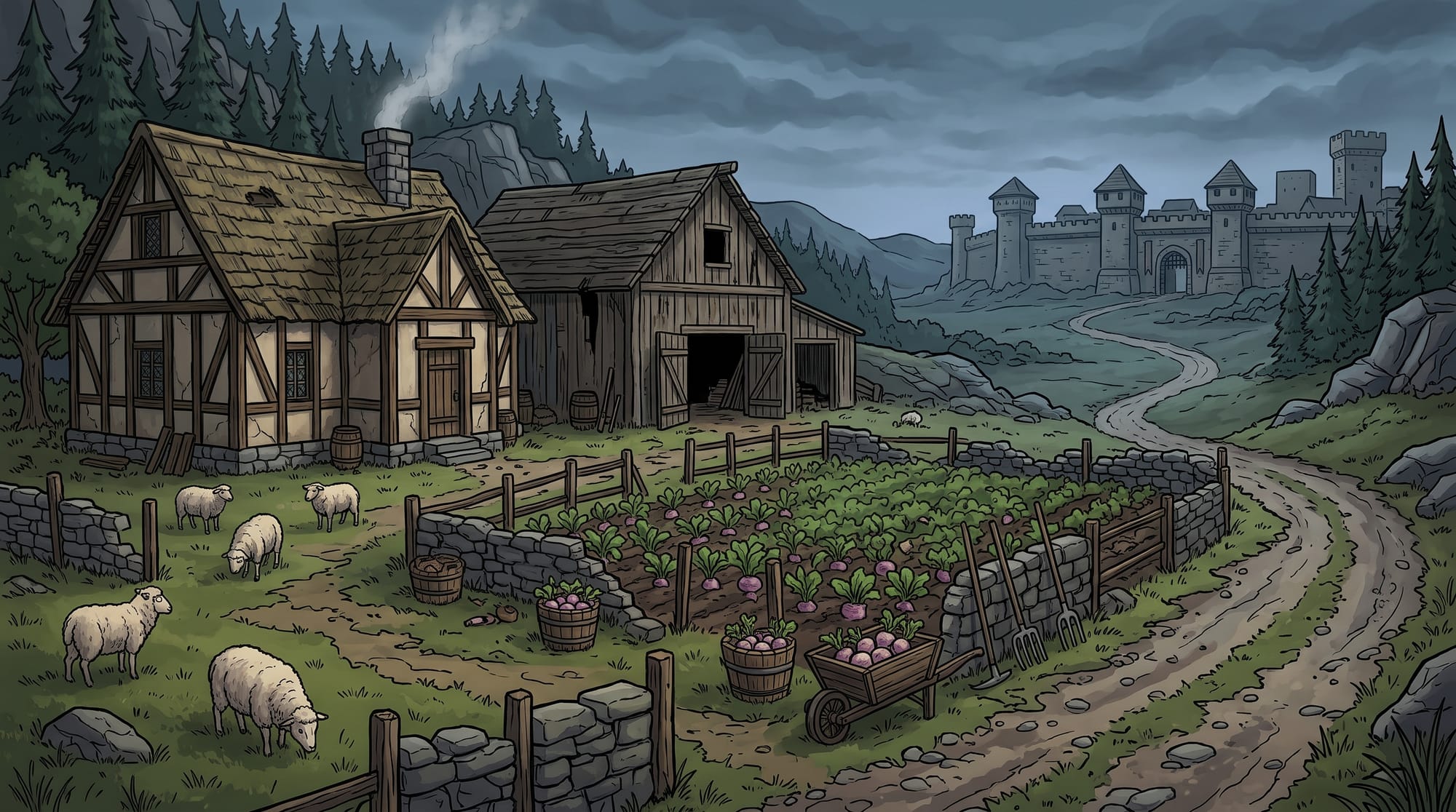
But the harshness of Gothic 2 is not limited to the flora and fauna. The social ecology of the human world is at least as unrelenting. When we finally reach the gates of the port city of Khorinis, we are not welcomed as a hero. The city guards brush us off abruptly if we look like a vagabond. To gain access, we have to integrate ourselves into the system. This might mean working hard on Lobart's farm for some simple farmer's clothes, sneaking through the sewers, or gathering valuable healing herbs for the alchemist Constantino. Each of these options is a logical framework anchored in the world.
Exactly here lies the magic that makes the game so timeless to this day: every small progression, like the first rusty sword, the first real leather armor, or the first NPC who doesn't immediately turn us away, feels like a real, earned level-up. Because everything was denied to us at the beginning, every success gains an incredible weight and meaning. Gothic 2 didn't just show us how to play a role-playing game, it taught us respect for a self-sufficient, functioning world. It forged a resilience in us that shapes our character far beyond the game.
The Architecture of Society: Factions with Rough Edges and Real Consequences
In many modern role-playing games, the faction system resembles a superficial buffet: you can often become the leader of the mage's guild, the best thief in the city, and simultaneously the radiant champion of the warriors, without these paths mutually excluding each other. Gothic 2 chooses a far more radical and brilliant approach here: the choice of guild is a permanent system lock. Whoever decides on a faction defines their entire playthrough, their abilities, and above all, how the world reacts to them. This framework gives our decisions enormous weight and makes the replay value unmatched even after decades.
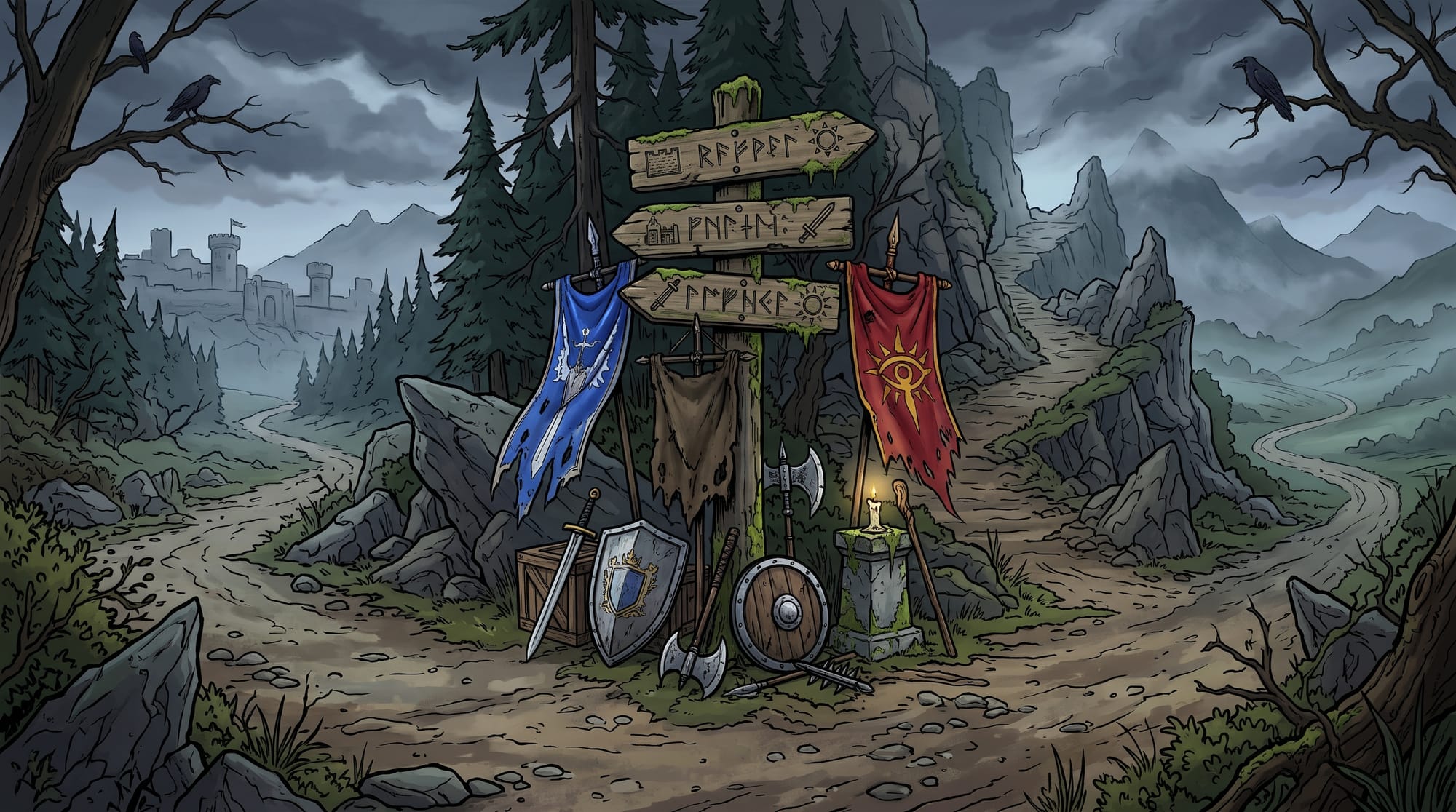
Particularly fascinating is the rough dynamic on Onar's farm with the mercenaries. For veterans of the first game, this path feels like a meeting with old acquaintances from the New Camp. Under the leadership of the level-headed Lee, the outcasts and tough guys gather here. But Piranha Bytes did not program this group as a harmonious monolith, but as a social powder keg. The camp is split: on one side are Lee's loyal confidants, on the other side the unpredictable troublemakers around Sylvio, which include thugs like Bullco and the waylaying Sentenza, who hits us up for protection money right at the entrance. These internal frictions and power struggles make the mercenaries so incredibly authentic. You don't join a perfect order, but a dysfunctional, dangerous squad where you literally have to fight for respect. The later, organic rise to the heavily armored Dragon Hunter (a class that relies not on divine assistance but on pure will to survive and forged steel) is the logical, satisfying consequence of this path.
Those who choose the path of magic, on the other hand, experience a completely different gameplay feel. In the monastery of the Fire Mages, you don't start as a talented prodigy, but as the lowest novice. That means sweeping chambers, pulling weeds, and distributing sheep sausage to the brothers. It is a masterful pacing that teaches us humility. Only when you pass the dangerous Test of Fire and are handed the red robe do you feel the shift in the world architecture. Suddenly, the citizens of Khorinis respectfully make way for us and address us as "Master." The game rewards the initial hardship with tangible social advancement. The path of the city guard is similarly structured: you start as a simple militiaman keeping order in the dirty alleys of Khorinis, and laboriously earn the privilege of later being accepted into the elite ranks of the Paladins.
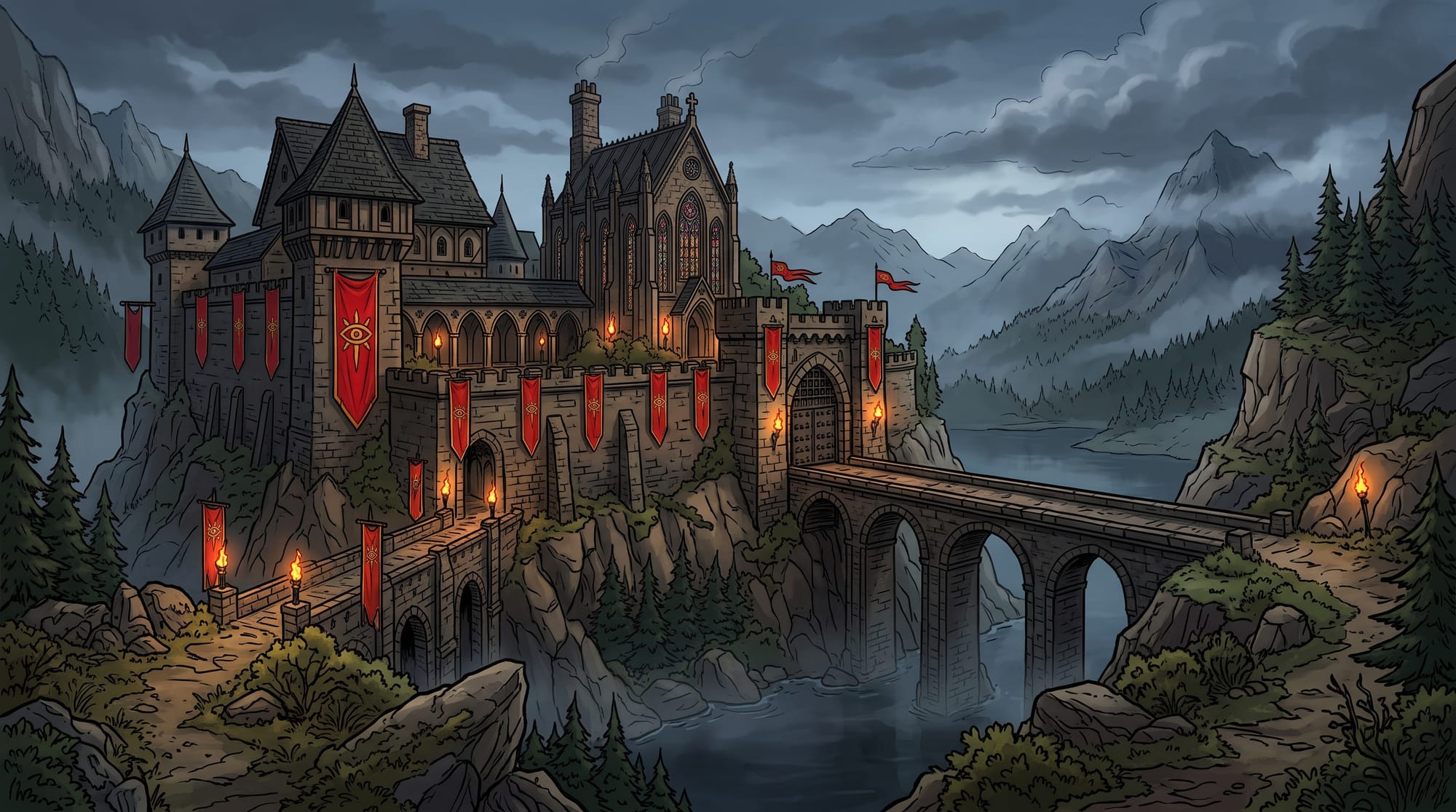
These clear, separate paths bundle together in a quest architecture that remains unparalleled to this day. Gothic 2 does not send us into isolated zones that we tick off and forget. Instead, it weaves an organic network across the entire landmass. When the game suddenly forces us in the second chapter to return over the pass into the destroyed Valley of Mines from the first game (which is now overrun by orcs and dragons), it is a moment of pure goosebumps. With the brilliant add-on Night of the Raven, this ecosystem was also expanded to include the forgotten valley of Jharkendar. The pirates, the bandit camps, and the ancient Maya-like ruins blend so seamlessly into the existing world that it is hard to imagine today how the main game ever functioned without this module. The entire game design pulls us crisscross through a world that turns, breathes, and reacts to every one of our actions.
Of course, one must not conceal that Gothic 2 does indeed drift into epic spheres later in the game. When we finally face the dragons deep in the orc-besieged Valley of Mines, the massive meta-story about the cosmic conflict of the gods unfolds. Yes, the game ultimately forces us into the role of a chosen one, a servant in the divine chess game. But the fundamental difference to titles like Skyrim lies in the brilliant pacing: it takes countless, hard hours before this epic question of destiny truly pushes itself into the foreground. The game does not throw this hero role at us in the first few hours of play like a cheap achievement. Exactly this long, grounded phase (where we are not yet a radiant avatar, but fighting for every experience point and bare survival) is undisputedly the best part of the Gothic experience. When we actually stand before a dragon later, we have truly earned the right to lead this epic confrontation through blood, sweat, and countless setbacks.
The Timeless Soul: Raw Dialogues and Unvarnished Atmosphere
Graphics engines age, textures blur over the years, and animations inevitably feel wooden after over two decades. But the true soul of Gothic 2 has remained absolutely timeless and unmatched to this day: its tonality. The world of Khorinis does not speak in bombastic, artificial high-fantasy verses that constantly talk our ears off with complex lore. It speaks the language of the streets, the farms, and the dirty harbor taverns. When an NPC greets us with a dry "Rely on someone and you are abandoned" or a direct "Full pound to the mouth" (Volles Pfund aufs Maul), it creates a functional immersion that no modern ray tracing in the world can simulate.
The legendary voice actors breathed life into characters who do not feel like mere information dispensers, but like real people with bad moods, tangible problems, and their own daily routines. The dialogues are rough, unvarnished, and extremely direct. If we disturb a citizen of Khorinis in his bed at night, we are not politely explained the current quest; instead, we are yelled out of the hut with a drawn weapon. From a psychological and systemic point of view, this harsh social feedback is a masterpiece of game design: it forces us to respect the residents as independent individuals with personal boundaries. We are not the fawned-over VIP who is allowed to march into strangers' houses unpunished, but part of a functioning ecosystem to whose rules we must adapt.
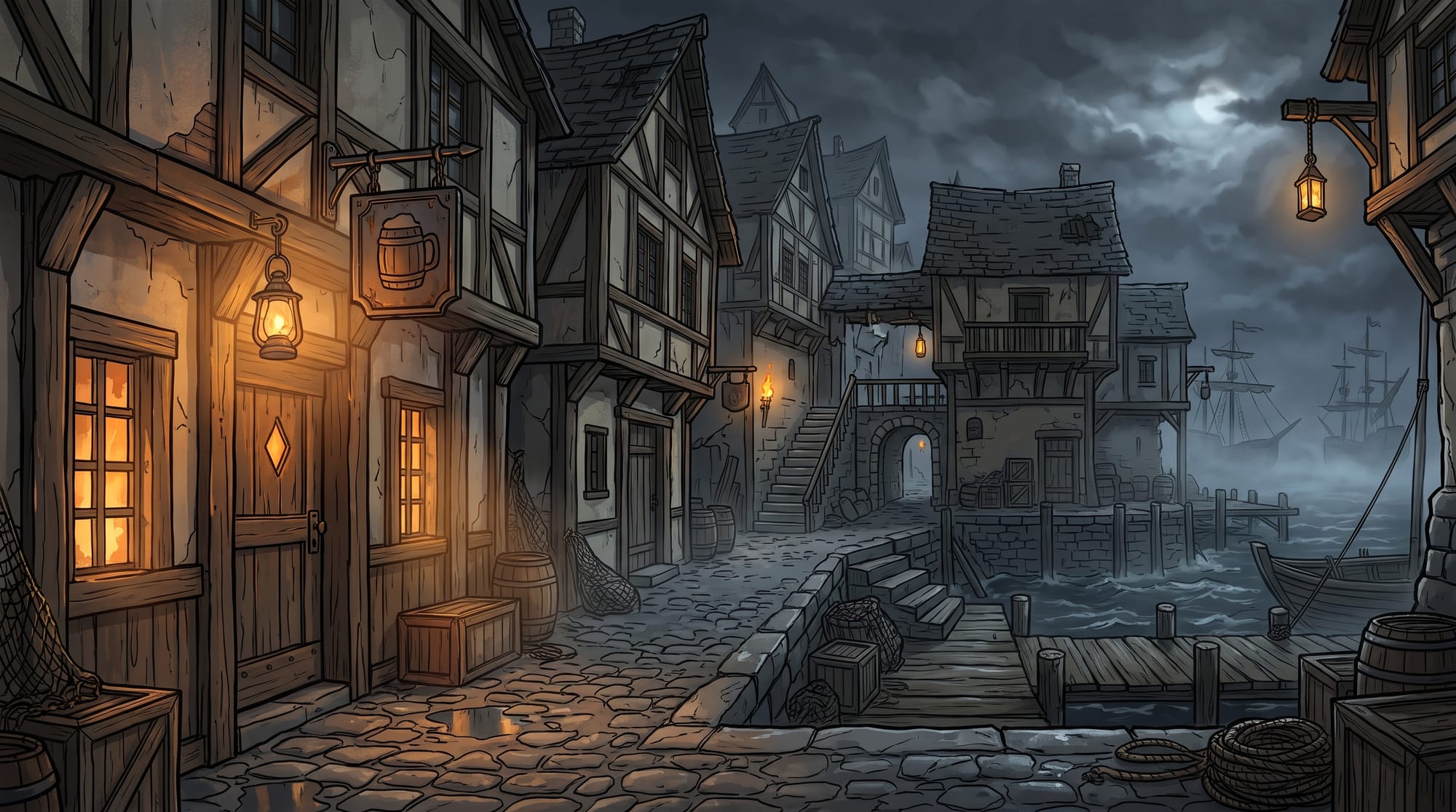
This rough tone hardens us, but paradoxically forms a much deeper and more authentic emotional bond to the game world. When characters in this harsh environment truly have our backs (like our old companions Diego, Milten, Gorn, or Lester), they feel like real, loyal friends. Friendship and trust are rare, hard-earned resources in Khorinis. It is exactly this unmistakable, charmingly rough Ruhr-area-fantasy vibe that gives Gothic 2 its immortal soul. It gives the game an edginess that is so painfully missing from many modern, often overly polished AAA productions today.
Passing the Torch: Why the RPG Scene Needs Alkimia Interactive
Gothic is far more than just a nostalgic memory; it is an essential blueprint for masterful game design. Exactly for this reason, the future of this brand is incredibly important for the entire developer scene. If modern studios want to learn how to build organic, believable worlds with real consequences, they must study the system architecture of Gothic. After years of silence, the responsibility for this valuable IP now lies with Alkimia Interactive in Barcelona.
Under the leadership of Reinhard Pollice, the studio has taken on a monumental task: porting a milestone of gaming history into the modern era without ironing out its unvarnished, rough soul. That they can bear this responsibility was impressively proven with the release of the Gothic 1 Remake in June 2026. The very positive Steam reviews from players show quite clearly that Alkimia has cracked the code of the original. They resisted the temptation to adapt the game to modern mainstream habits and instead retained the demanding, edgy framework.
The fact that the developers have proven how much respect they have for the source material creates an enormous foundation of trust. It absolutely justifies the hype surrounding the upcoming Gothic 2 Remake. The industry needs developers who have the courage not to treat players like VIPs, but to present them with a world that demands its own respect.
A Defining Code: Gothic as the Foundation of My Creatorship
For me personally, Gothic never remained just a good game. It is the fundamental patch that has permanently overwritten my entire view of role-playing games and my own playstyle. Anyone who learned in their younger years in Khorinis that the universe does not revolve around their own belly button approaches new worlds with a completely different sense of observation and a deep appreciation for good world-building. This shaping is the cornerstone for everything I do today as a creator.
This influence resonates as a fixed constant in all my projects. My entire creatorship on Candy Myluv carries the DNA of Gothic within it. My VTuber identity as a loyal servant of Beliar is a direct, deeply rooted homage to this lore. This connection goes so far that even in completely different worlds, such as in my Let's Play of Kingdom Come: Deliverance, I make decisions and perform actions out of pure role-playing joy, always in the name of the dark god. It is a meta-roleplay that makes my content unique.
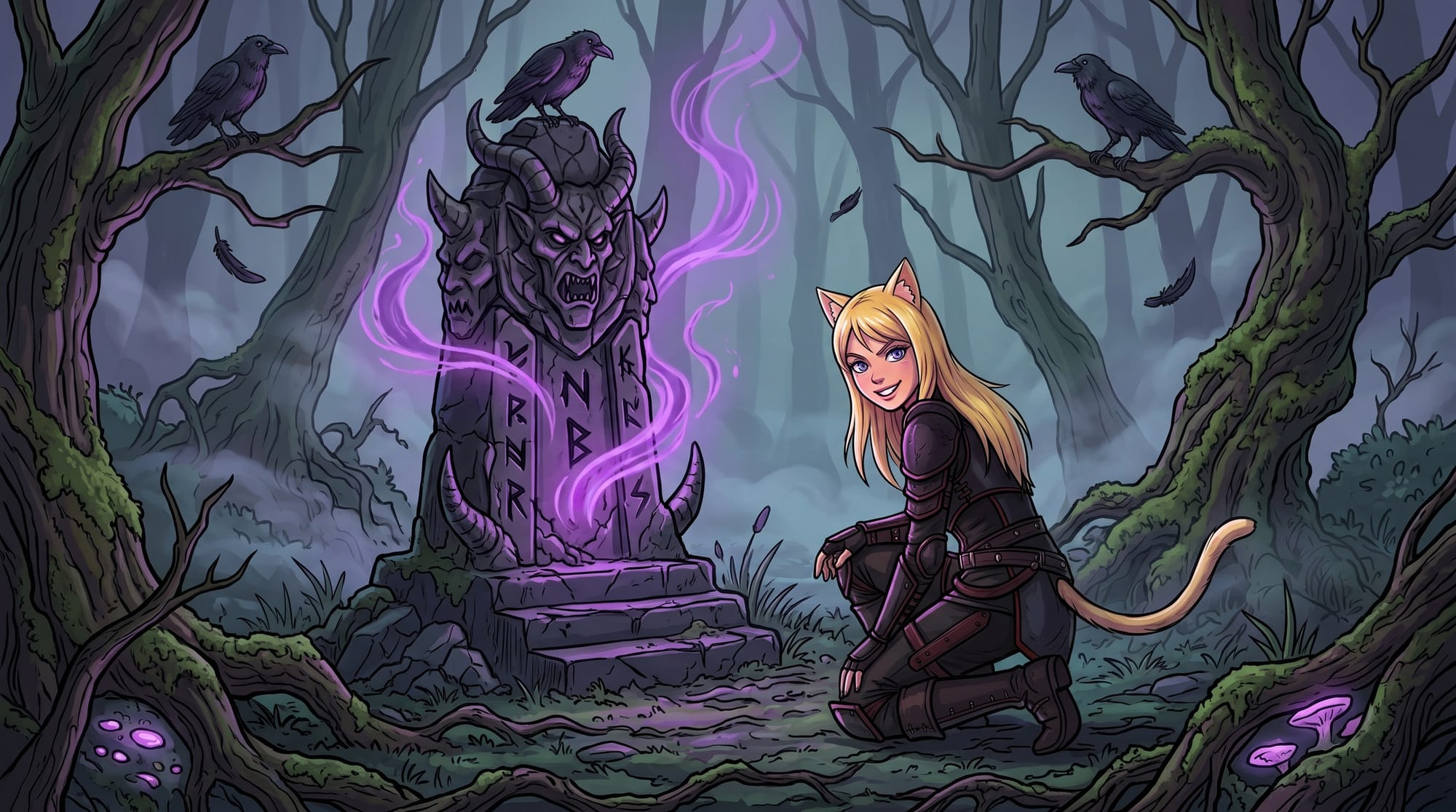
On my Youtube-channel, I have already extensively celebrated Gothic 2 in the Unreal Engine and the magnificent Gothic 1 Remake. It is these Let's Plays where I can share my absolute passion for this masterpiece with my community. The upcoming remake of Gothic 2 will not just be a new game on the release radar for me. It will be a return to the exact world that taught me what it truly means to be part of a functioning, living role-playing game.