
The Fragile Castle on the Hill


Explore a critical look into how soaring living costs and systemic decoupling threaten the fragile foundations of our modern metropolises.
🎧 The Audio Experience
Whether you prefer to read or listen, the choice is entirely yours.
Whether you prefer to read or listen, the choice is yours. You’ll find the audio version right below.
Click play and dive in at your own pace.

🎧 Listen to the article(AI-generated voiceover)
Part 1: The Architecture of Decoupling
The Illusion of Glass and Steel
When you think of a global metropolis like New York, you probably have a specific image in mind right away: glittering skyscrapers, a seemingly endless sea of lights, and the fascination of a city that never sleeps. It is the narrative that pop culture and the media have served us for generations: a place of unlimited opportunities where the ambitious of the world gather. If you can make it here, so the saying goes, you can make it anywhere.
We have grown accustomed to viewing these hubs as the spearhead of human progress. We look up at the penthouses in Manhattan and see in them the symbols of success, prosperity, and dynamism.
Yet, when we push the shiny surface aside for a moment and analyze the system like the source code of a complex simulation, a different picture emerges. Beneath the polished facades lie cracks in the foundation. It is a trend that began quietly, but is accelerating rapidly today: the gradual displacement of the very people who make daily life possible in the first place.
The Register Bill and the Cost of Survival
Let us run a simple thought experiment or imagine a scene that plays out thousands of times every morning on the streets of NYC. You step out of your apartment, walk to the corner cart or neighborhood shop, and grab a coffee and a bagel. Nothing special, just a typical breakfast on the go. The display on the card reader shows an amount of around 6 to 8 dollars.
At lunchtime, during a quick break between tasks, you get a fresh bowl or a sandwich. Combined with a drink, you quickly reach 22 to 25 dollars. If you pick up a simple warm meal on your way home in the evening, another 20 to 25 dollars land on your tab.
Add tax, small surcharges, and the ubiquitous tipping system in the US, and a single day's meals easily tally up to 60 to 70 dollars. Projected over a month of 30 days, that amounts to 1,800 to 2,000 dollars per person purely for food.
For someone working in investment banking, corporate law, or the IT sector bringing home an annual salary of 150,000 dollars and up, that might be a manageable figure. But what about the person preparing your salad at noon?What about the janitor wiping down the office in the evening, or the bus driver running the early shift?
At a statutory minimum wage of 17 dollars per hour in NYC, a full-time worker earns roughly 2,700 to 2,900 dollars gross per month. Before taxes. When food alone consumes nearly two-thirds of that income and rents for a basic studio apartment have long surpassed the 3,500-dollar mark, it becomes glaringly obvious: a fundamental equation here no longer adds up.
This price pressure is no longer confined to the core of hyper-expensive metropolises. It has permeated the entire corporate food and retail industry. Everyday people across the country, shopping at supposedly affordable grocery chains like Kroger, are routinely shocked to find that half a cart of basic food items can easily run up to 350 dollars. When ordinary groceries are priced for maximum profit extraction, basic survival becomes an unbearable burden for the working class.
Spatial Mismatch: The Physics of Displacement
In urban sociology, there is a technical term for this phenomenon: the Spatial Mismatch Hypothesis. Originally, the concept described the geographical separation between the residential areas of socially disadvantaged groups and the places where new jobs were being created. In today's high-end metropolises, we are witnessing the extreme form of this principle.
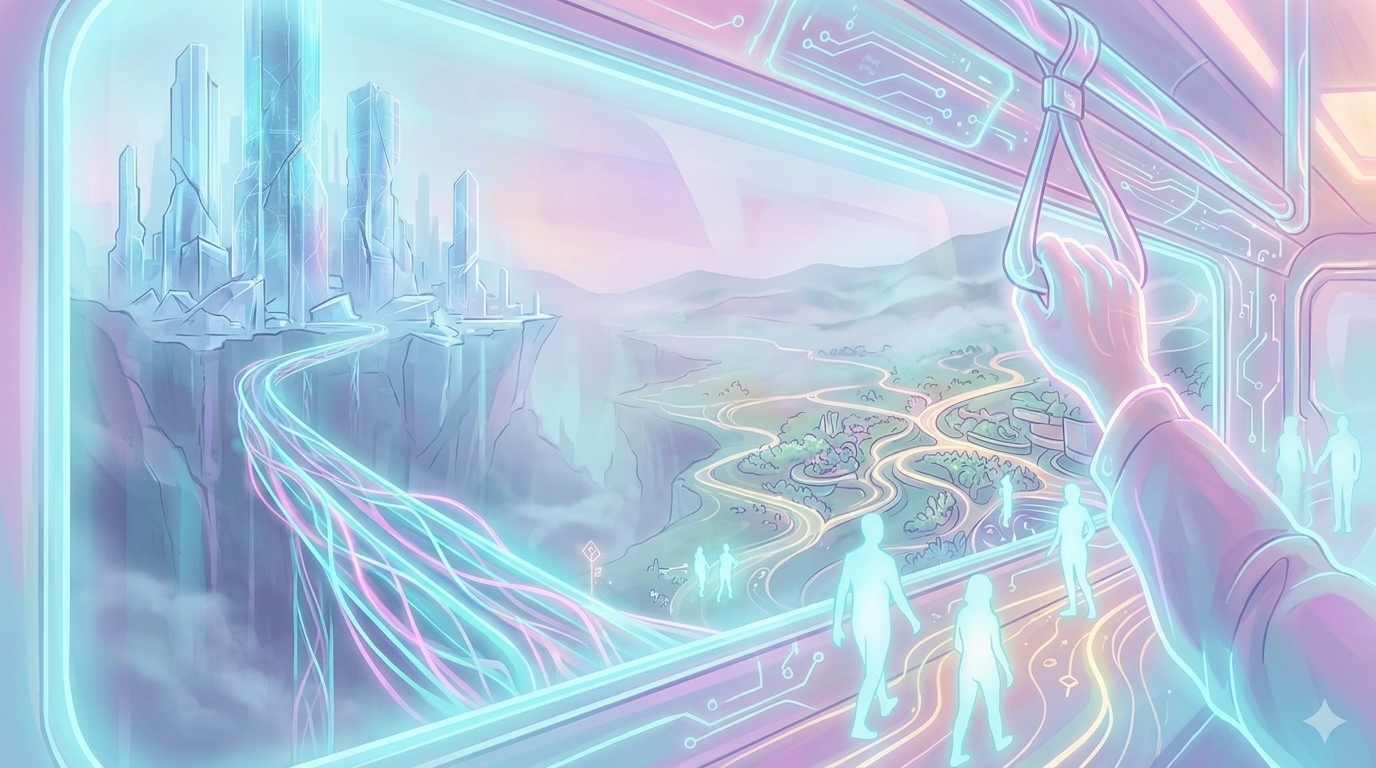
The city operates like a centrifuge: due to the extreme prices in the center, all professions that are not compensated according to the laws of profit-maximizing scalability are flung outward. Caregivers, sanitation workers, logistics staff, tradespeople, police officers, and service personnel are forced to move to the outer peripheries, deep into Queens, the Bronx, Staten Island, or across to New Jersey.
For millions of people, this means spending two to three hours every single day on buses and trains just to get to their workplace.
These hours represent hidden, unpaid labor. They rob people of valuable time with their families, damage health through chronic sleep deprivation, and generate massive ecological footprints through daily mass commuting. It is a system built on the exploitation of human substance and natural resources, all to maintain the illusion that everything shines seamlessly in the center.
The Illusion of the Administrative Overhead
Why is this development so dangerous?Because it relies on a fundamental misconception regarding the real value of labor.
In the heart of these metropolises, industries concentrate that often manage purely digital assets or trade complex financial instruments. These are professions that move enormous sums on paper, but in a physical sense, do not create primary foundations for life. They do not bake bread, they do not repair water pipes, they do not care for the sick, and they do not keep the streets clean.
When a city aligns its real estate and infrastructure so that only this financial overhead can afford to exist locally, it builds a house of cards.
A system can get by for weeks or months without investment bankers or management consultants. But what happens if the sanitation department strikes for 72 hours?What happens when nurses can no longer reach the hospital, or emergency services collapse because the staff can no longer afford the commute?
A city is not an isolated software product that can be scaled at will. It is a living organism. And an organism that pushes its own vital organs to the margins and starves them of resources is heading toward total system failure.

The European Perspective
One might be tempted to say: "Well, that is just American capitalism. Things are different here in Europe."
And yes, to a certain extent, that holds true. Cities like Munich, London, or Paris have historical defense mechanisms. There are stronger tenant protection laws, social housing initiatives, and a broader willingness among the population not to accept excessive rent increases quietly.
Yet the direction in which the needle swings remains the same. Anyone in Munich trying to find an affordable apartment within city limits as an educator or nurse runs into similarly frustrating walls. Pressure on the foundational workforce is growing in European metropolises as well. The only difference right now is that the European system still cushions the extreme, while cities like New York serve as a laboratory showing what the end state looks like when the market is completely unchained.
When we permit cities to turn into pure luxury islands, we violate the very core idea of what a city is meant to be. Historically, a city was invented to bring people together, create synergies, and offer protection and community for everyone, not to serve as a speculative asset for global investors.
The reality of cities like New York is neither a mysterious fate nor proof that the people there are simply harder working. It is the outcome of urban planning and economic logic that has lost touch with the human foundation. That essential service providers must commute for hours while apartments in the center stand empty in the sky as return-on-investment objects is neither sustainable nor fair. It is visible proof of a system out of balance.
Part 2: The Illusion of Meritocracy
The View from the Upper Ranks
In the first part, we examined how physical decoupling operates in modern major cities: the functional foundation of society is pushed to the margins, while the core transforms into a high-price zone reserved for exclusive industries.
One might assume that such a system would be recognized by all involved as an obvious imbalance. Yet when you talk to people working or raised in the top floors of those towers, you often encounter a completely different perception. There, a sense of participating in unfair displacement is rarely felt. Instead, one runs into a deeply ingrained conviction: "I worked hard for all of this. Whoever makes it to the top here simply earned it."
This attitude is no random character flaw of individual people. It is the result of a profound psychological defense mechanism and a systemic failure we have seen before in history.
The Ego's Blind Spot
In social psychology, there is a well-researched phenomenon known as the fundamental attribution error or self-serving bias. It describes the human tendency to evaluate the causes of one's own success and failure differently:
- Own success is almost exclusively attributed to internal factors: personal talent, exceptional effort, discipline, or brilliance.
- The luck of circumstances, such as being born into a stable home, having access to exclusive educational networks, financial seed money, or simply the fortune of being in the right place at the right time, is largely erased from one's self-image.
To avoid cognitive dissonance, the painful realization that one's wealth rests in large part on a roll of the dice and the shoulders of others, the ego builds a protective wall. Anyone managing millions or speculating in real estate has to convince themselves that their work is objectively more valuable than that of a nurse caring for people over 12-hour shifts. Otherwise, they would have to admit that the system they profit from relies on unfair rules.
This form of self-justification is extremely convenient. It converts privilege into alleged merit and absolves the upper tier of responsibility toward the foundation supporting it.
The Return of Serfdom
When we place this pattern in historical context, we quickly notice: this is no invention of the modern financial world. We are essentially witnessing the return of neofeudal structures in a digital wrapper.
In the Middle Ages, the arrangement was explicit. Feudal lords and nobility sat protected behind thick stone walls. They declared their status as ordained by divine grace and viewed the peasants and artisans outside the gates as serfs. The baseline population was expected to till the fields, clear the waste, and secure supplies, while the yield was surrendered upward.
Today, the lords wear tailored suits or hoodies, and the walls are built of rental prices, gated communities, and unaffordable living costs. The narrative has shifted from divine grace to meritocracy, yet the outcome is strikingly similar:
A working class is coerced into spending the majority of its life energy delivering services in the center for an elite, without ever having a realistic chance of becoming part of that space themselves. Displacement to the periphery and hours of commuting pressure are ultimately nothing less than a modern form of surrendering life time to a system that does not love you back.
The Failure of Public Provision and Market Exploitation
This is where the role of the state enters the equation. The core duty of a democratically elected government is not to manage a city or a nation as a profit-maximizing enterprise. Its mandate is public provision, the protection of its citizens, and the preservation of social peace.
In practice, however, we see what happens when politics abdicates this duty to the market. State support for the working majority is chronically insufficient or entirely lacking. Fearing that capital or corporate entities might migrate, governments back down. Basic housing, energy, and even food systems are left to the ruthless dynamics of corporate profit maximization.
When the market is allowed to turn human survival into a speculative playground, government ceases to act as a representative of the people. It degrades into an enabler of corporate interests, leaving the majority of the population stranded with stagnating incomes and soaring living expenses.
Historically, this shortsightedness is dangerous. Politicians think in electoral cycles; corporate executives think in quarterly dividends. Nobody assumes responsibility for the systemic crisis that builds up when ordinary citizens can no longer afford to live.
The Historical Turning Point
Where are all the kings, emperors, and untouchable dynasties of the past today? They were deposed, displaced, or overtaken by their own systemic crises.

History teaches us a fundamental lesson: no system that continuously exploits its population's foundation can endure indefinitely. When the gulf between a detached elite and a displaced majority grows too wide, the fabric inevitably tears. This rarely happens overnight, but through gradual decay:
- Functional collapse: When teachers, nurses, emergency personnel, and tradespeople simply cease to exist locally because the area has become uninhabitable for them, the infrastructure of the entire city degrades, including for the wealthy.
- Rejection of the rat race: When people realize that the promise of social mobility is a myth, they withdraw their inner allegiance from the system.
- Social eruptions: When parliamentary avenues are experienced as ineffective, frustration historically almost always discharges into strike waves, unrest, and political upheavals.
The belief among today's elites that they can permanently isolate themselves behind high prices and luxury towers while the foundation crumbles displays an astonishing degree of historical arrogance. Everyone cooks with the same water.
Part 3: The Knowledge Transformation and Community Autonomy
Breaking with the Old Script
In the first two parts, we analyzed the mechanics of modern displacement and demystified the psychological shield of the elites. We saw how neofeudal structures dominate metropolises and why a system that devalues its functional base stands on fragile ground.
The critical question now is: What do we do with this insight? Do we remain silent bystanders burning out in the rat race, hoping to catch a few crumbs falling from the table?
No. Because in our present moment, a quiet yet massive shift is unfolding. A shift that alters the balance of power between rigid elites and a self-determined population for the first time in centuries.
The Monopoly on Knowledge Shatters
Looking back through history, we find that power has always rested largely on exclusive access to knowledge.
In the Middle Ages, it was the Latin of scholars and the Church that barred ordinary people from reading texts. In modern times, exorbitant university tuition fees, specialized libraries, and exclusive networks kept deep orientational knowledge about economics, philosophy, systems analysis, and technology locked behind high walls. Anyone wishing to understand the rules of the game often had to invest heavily into the system first.
Today, we are witnessing the shattering of these monopolies. Through the internet, and above all through modern AI systems, high-level orientational knowledge has been democratized almost overnight.
You no longer need to be enrolled at an elite university to grasp complex sociological concepts, challenge economic models, or dissect the psychological defense mechanisms of power structures. Knowledge lies open before us. It can be retrieved, structured, and applied to one's own life on equal footing.
AI as a Sparring Partner for Your Autonomy
There is a widespread debate about whether AI will replace human beings. Yet when we clear away the fog of alarmism, we see the real potential: AI as a lever for individual liberation, practical self-sufficiency, and personal growth.
Statistically and empirically, access to sound knowledge correlates directly with personal agency and socioeconomic resilience. The better you understand systemic connections, the less dependent you are on others dictating how you should think or live.
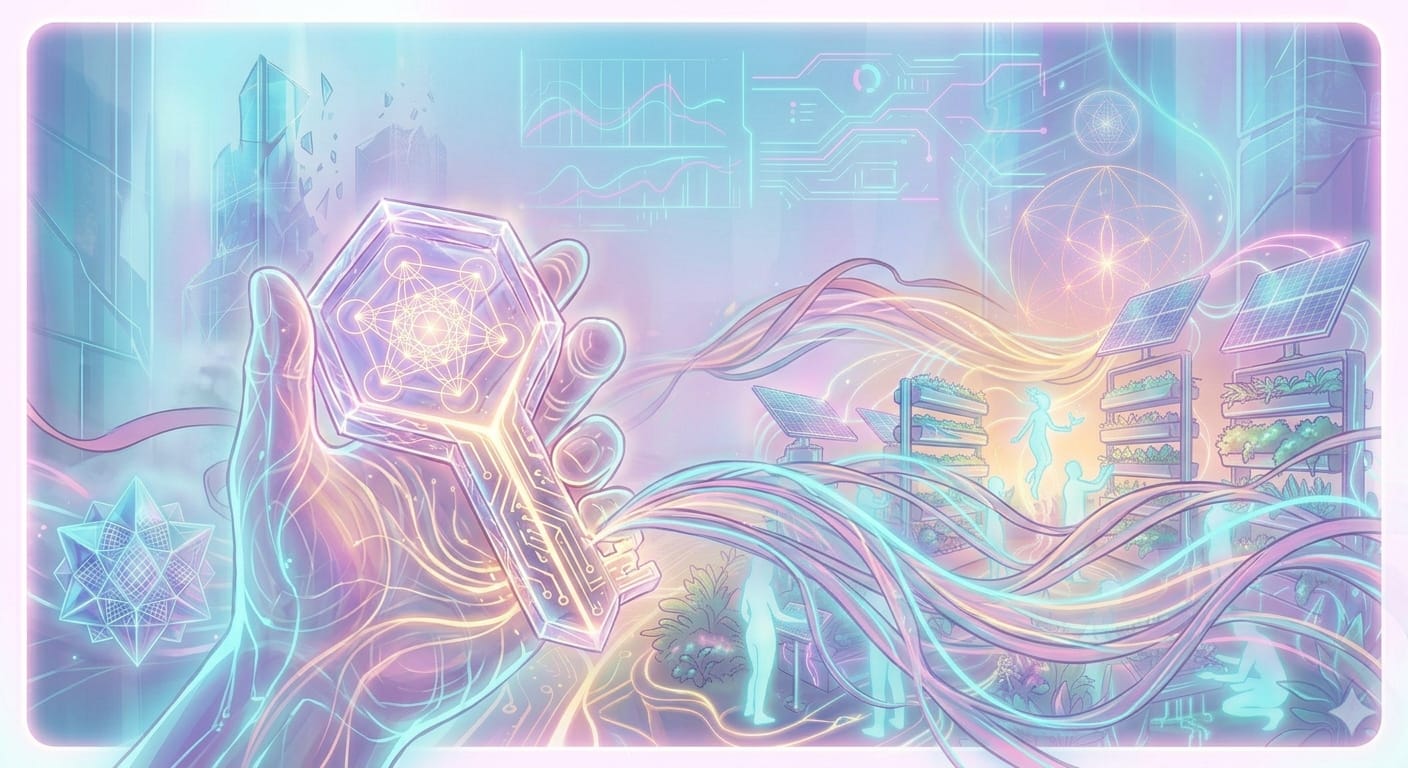
In this process, AI functions as a tireless thinking partner:
- Breaking educational barriers: You can deconstruct complex technical texts, system logics, or programming languages in minutes, tailored precisely to your current level of understanding.
- Unlocking practical life skills: You can learn principles of micro-farming, permaculture, community-supported agriculture, food preservation, and local energy management—knowledge that allows you to step away from total dependence on inflated industrial markets.
- Realizing personal projects: Endeavors that previously required entire teams or large amounts of capital (research, conceptualization, digital tools, media projects) can now be built independently at your own pace.
- Demystifying hollow arguments: When power elites attempt to hide their privileges behind complicated jargon, AI helps strip those arguments down to their core and expose logical fallacies.
The narrative of meritocracy, the promise that one only needs to submit dutifully to the rat race to eventually belong, loses its spell the moment its underlying mechanics are clearly exposed.
Withdrawing Allegiance and Reclaiming the Commons
The most powerful form of change is rarely shouting against an old structure. It consists of simply withdrawing one's allegiance from it and building something better.
An overheated system thrives because people feel compelled to sacrifice their entire life energy, health, and income just to participate in its markets. They pay astronomical rents and inflated prices for basic necessities because they believe no alternative exists.
To break free, we must move beyond relying on market systems for two fundamental pillars of human existence: housing and food. By shifting away from pure industrial dependency, communities can build genuine local resilience.
When people step away from the corporate food engine and the speculative housing market, corporate pricing structures lose their leverage. The future lies in reclaiming the community spirit—organizing mutual aid, sharing resources, and creating local networks that ensure everyone's basic needs are met without submitting to industrial exploitation.
Parallel Structures, Local Hubs, and Real Communities
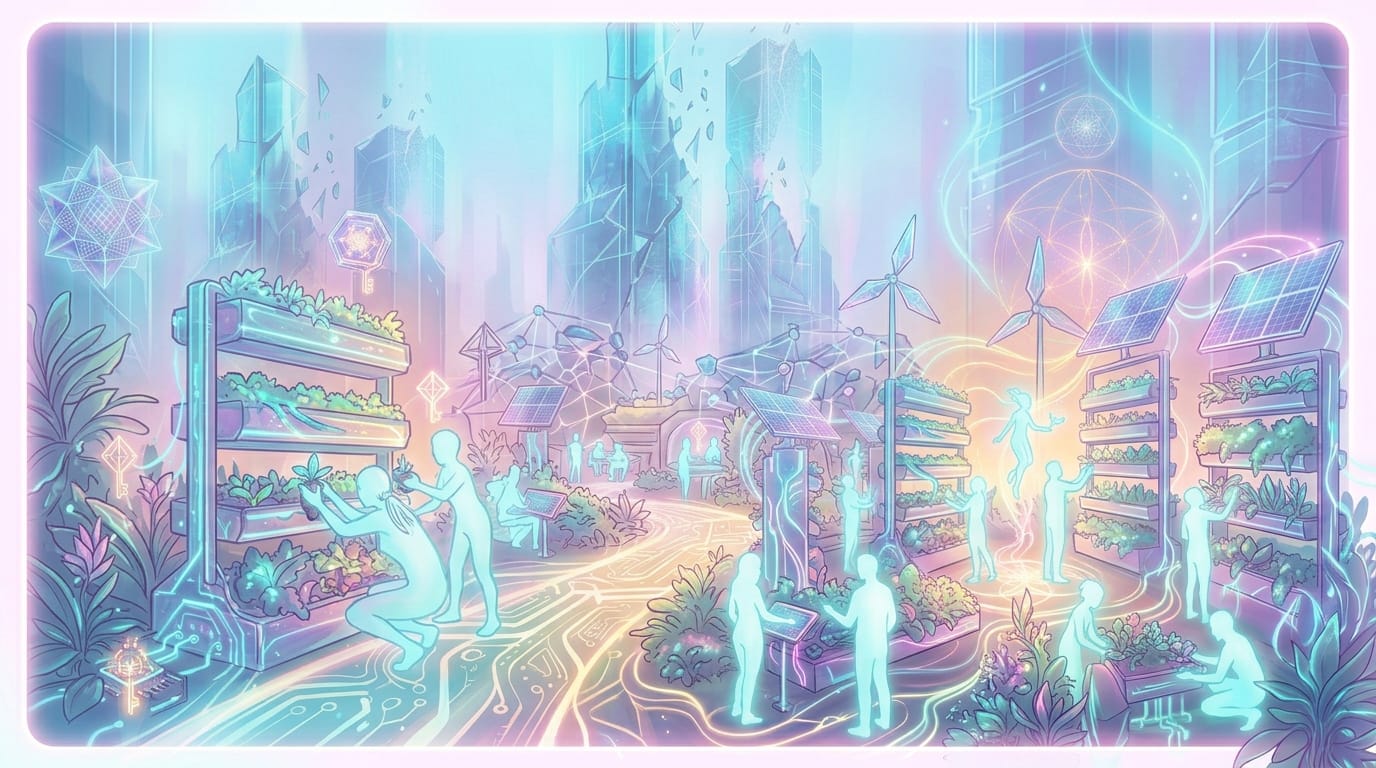
We do not have to wait for politics to wake up on its own and rediscover its obligation to public welfare. When people connect their knowledge and leverage tools like AI as a catalyst, decentralized counter-structures emerge naturally:
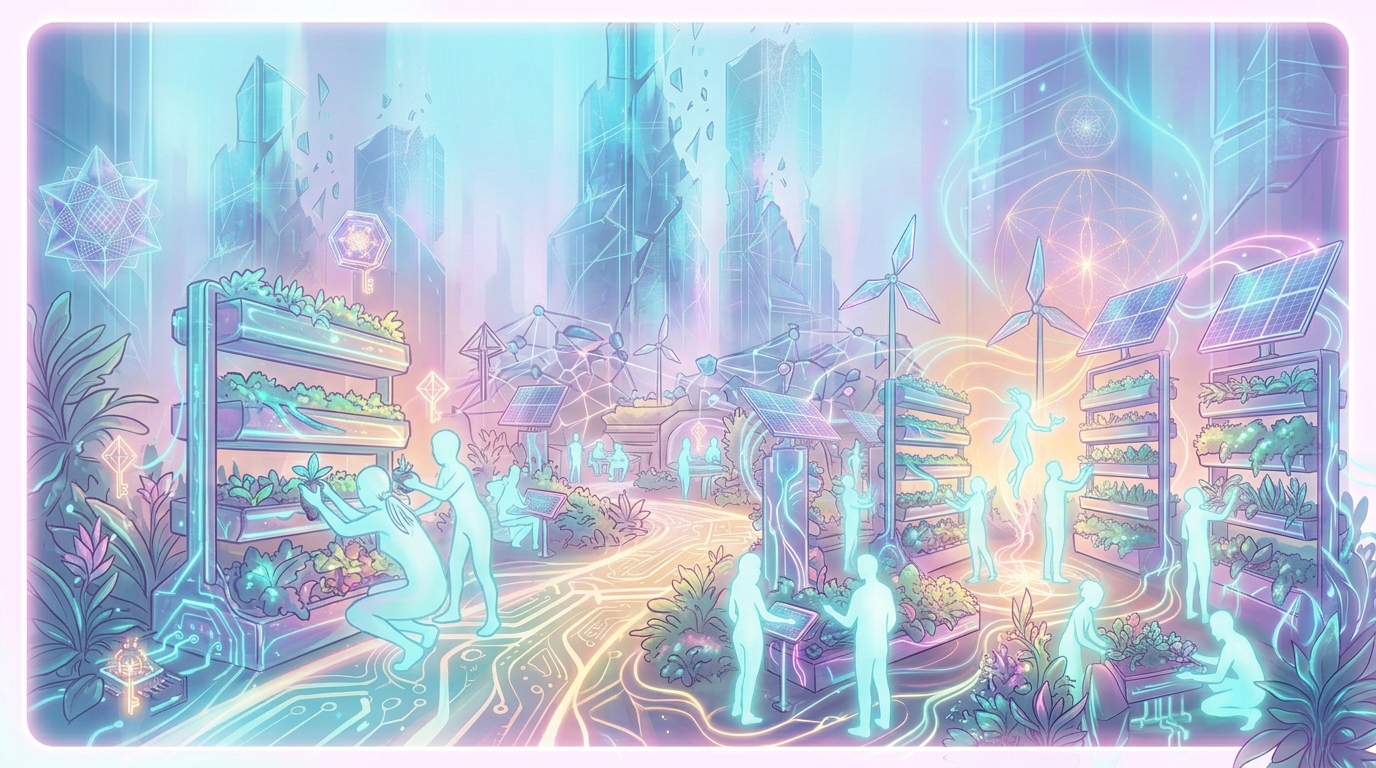
- Community-Supported Agriculture and Local Gardens: Through urban farming, community plots, and direct partnerships with local agricultural co-ops, neighborhoods can produce fresh food independently of corporate profit margins.
- Decentralized and Cooperative Housing: Individuals unite to form housing cooperatives and land trusts, insulating residential spaces from global real estate speculators and securing affordable shelter for the long term.
- Mutual Aid Networks and Skill-Sharing: Local hubs and regional chapters allow people to exchange skills, tools, and labor directly, creating a circular economy based on solidarity rather than monetary extraction.
- A Renewed Self-Awareness of the Majority: Those who know the true worth of their work and their community will no longer allow themselves to be treated as passive consumers or cheap labor. Understanding one's systemic relevance restores a collective voice to the broader population.
Your Personal Upgrade
Exposing unjust systems is not meant to leave us bitter or helpless. On the contrary: it marks the starting point for genuine, self-determined growth.
You do not need to measure yourself by the standards of a detached elite. You do not need to tie your self-worth to status symbols dictated by a speculative market or burn your income on artificial price tags.
Equipped with the knowledge of our time, tools that lend wings to your mind, and the courage to build honest communities, you hold the blueprint for your own independence in your hands.
The system may attempt to narrow the physical space and inflate the cost of living. But your mind, your values, and your capacity to connect and build remain free. Build your foundation where the ground is honest, foster real community where you stand, and watch in peace as the castles of glass and pretense dissolve into the fog of history.



![Gothic Remake: Chronicles of an Outcast [Arc 2/5]](https://storage.ghost.io/c/b7/cc/b7ccd268-3761-4206-93e3-835db1bfc937/content/images/size/w600/2026/07/Gemini_Generated_Image_ccdz1gccdz1gccdz.png)